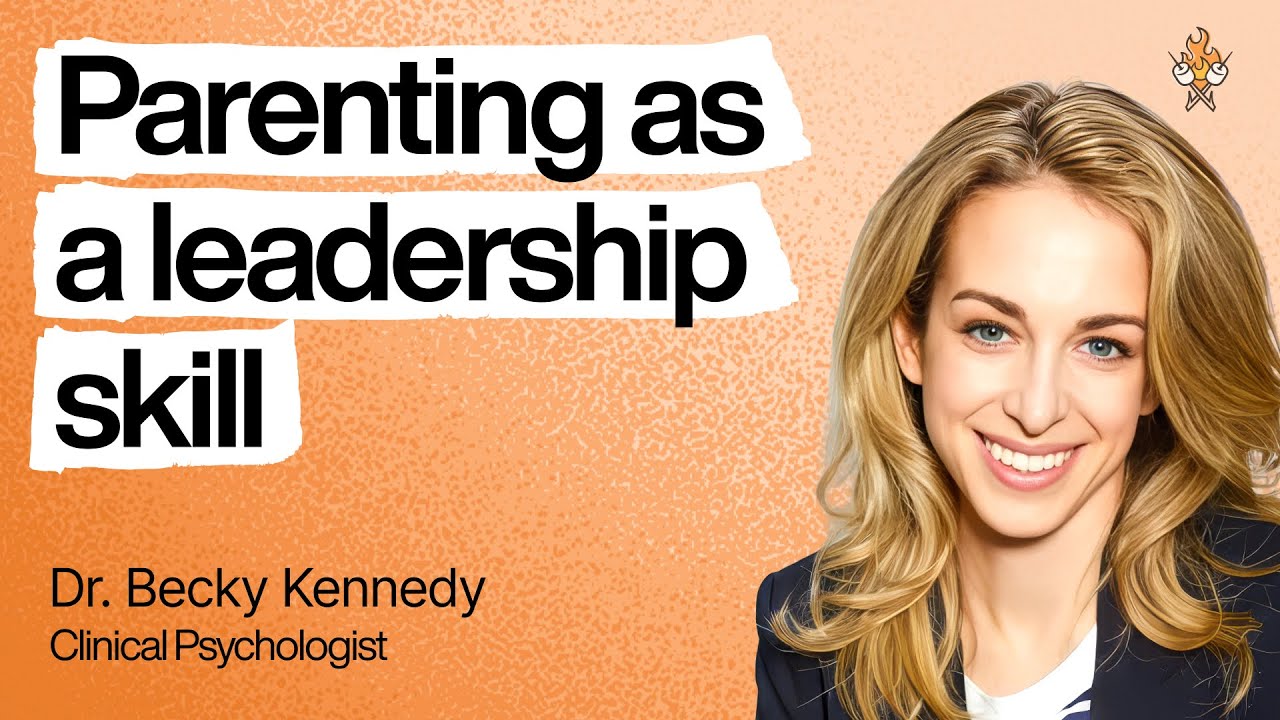
Dr. Becky Kennedy
Dr. Becky Kennedy 把一整套育儿方法论搬到工作场景:从 repair、connect-before-correct、
Dr. Becky Kennedy 把一整套育儿方法论搬到工作场景:从 repair、connect-before-correct、 MGI (most generous interpretation)、good-inside (把 identity 和 behavior 分开), 到 sturdy leader 的三种"机长广播"、boundary 的精确…
为什么这期值得听
一个奇怪的交集
临床心理学家、育儿权威被请上产品经理的播客——主持人的假设是办公室里的成年人更像婴儿。
一套理论两处用
Dr. Becky:所有人从 1 岁到 85 岁都需要同样的东西。一套原则既适用于 2 岁,也适用于 40 岁。
几个硬核工具
repair、MGI、sturdy leader、boundary 的精确定义、"I believe you + I believe in you"——全是可以照抄的话术。
一个反直觉的结论
Optimizing for happiness 在童年反而造就成年的 anxiety 和 fragility。同理适用工作团队。
一个让人停一下的故事
一个自伤两年未接受治疗的少女:"Can you believe they let me make that decision?"——整期的锚点。
一条明天就能用的话
"If I could do one thing different this week to be a better parent to you?" 换成 manager 一样管用。
先把前提摆出来
"Most adults in the corporate environment are really just babies in disguise."
会议上要抢 credit、不肯分预算、不让自己喜欢的项目被砍、要别人帮自己解决问题。"他们看上去是大人,但其实是婴儿。"
Dr. Becky 的"最大善意解读"回应:
"all humans need the same things. Whether we're one or five or 45 or 85"——需求没变,只是随年龄改了说法。行为出问题,是需求没有被好好满足。
这期要用的一套坐标
两类工作
- 设边界(boundaries)——你决定要做的事
- 验证情绪(validate)——承认对方的体验是真实的
Dr. Becky: "这两件事合起来才是 sturdy leadership。大多数人只做了其中一半。"
三个操作工具
- repair:事后回头修补
- MGI:most generous interpretation
- connect before correct:先连接,再纠正
两个底层假设
- 人都是 good inside(behavior ≠ identity)
- 坏行为 = feelings overpower skills
一条总目标
resilience over happiness——长期韧性优于短期舒服。
Repair:最核心的关系工具
安全依恋 (secure attachment) 的定义不是"父母从不出错",而是有一个愿意事后回头修补的大人。
挡在路上:我要做一个完美的父母/领导。Dr. Becky 家:"perfect is creepy"。
Repair 三步:① 承认自己那一部分 → ② 说出对方受到的影响 → ③ 说下次会怎么做
工作版本:"hey, earlier in the meeting, I totally cut you off. I used a really harsh tone... I'm sorry. I'm going to work on that."
Connect before correct:报税的故事
场景 A(失败版)
你刚坐下来看书,配偶走过来:
"Becky, we have to do our taxes."
你:"Whoa, I just sat down to read a book."
他:"You don't listen to me. You have a listening problem. If you don't do the taxes with me right now, I'm taking away your dessert for a week."
Dr. Becky:没人会说我有 listening problem,大家只会说我有一个 husband problem。
场景 B(成功版)
"Whoa, I realize I didn't tell you this. We have to get our taxes done tonight. You look like you're just settling in to that book. Can we get on top of this together? I know we're on the same team."
"The chances that I will do taxes just skyrocketed."
原因:他看见我是一个完整的人,而不是"他世界里要被 get something done 的一个对象"。
同样的脚本在工作环境里:把 "我们要让你改版这个 PRD" 换成 "我看到你在赶这个 launch,我想和你一起想一下 PRD 要怎么改" —— 桥搭好了,事情才能过桥。
连接的真正门槛是 mindset,不是脚本
"we feel people's intention, not just their intervention."
带着 agenda 的连接
开会前花 30 秒假装关心对方长周末过得怎么样,其实心里在 count down。
Dr. Becky: "it's going to feel dirty to you. You're going to feel it."
✓ 真正的连接
和孩子:把手放他背上"久到有点不自然"、"I'm happy to see you"。
和同事:"Tell me a little about your long weekend"——不是在 count down 让他讲完好开始派活。
Dr. Becky 对自己的观察:"efficiency and relationship building are often in opposition."——效率型的人做关系建设会觉得"low stim",那种"没什么事在发生"的感觉反而是做对了。
Good Inside:把身份和行为分开
Dr. Becky 的品牌、书、公司、方法全围绕这一句话:
"这是一个好人,ta 正在做某件不好的事。"
我们惯常的 collapse:
"他总是迟到 → 这个人很懒。"
"他打了妹妹 → 他是个坏小孩。"
Dr. Becky 教的分离:
"I have a good kid who's hitting."
"This is a good person who is late."
为什么这重要:只有这样分开,你才能谈"行为"本身——否则对方一旦觉得你在评判他的 identity,整场对话就变成了无意识的"我是不是一个好人"的辩论。
万能开场白:"我们是一队的"
"First of all, I want to say we're on the same team."
"If that's the only thing people take from this, that is the most amazing way to have a more productive conversation with anyone."
一个 good-inside 式的迟到对话
- "我想先说我们是一个队的。"
- "你是个好人,你也知道我们需要按时开会。"
- "但这事一直在发生,所以我知道肯定有别的事 going on。"
- "是工作里有什么让你不想来?家里有事?还是时间管理的问题?"
- "Whatever it is, let's get to the bottom of it together."
这段话里发生了什么
- 把 identity 放到 off the table(你是个好人、你也不笨)
- 把 behavior 摆到桌子上(这事在反复发生)
- 把 归因打开(是外部?是 skill?)
那之后才能真的谈行为。
防御的秘密:对话内容不是对话内容
Dr. Becky 的一个关键观察——
"you're having a debate you don't even realize you're having, which is whether they're a good, moral, worthy person."
表面上的对话
- 你:"你这周报告做得很糙。"
- 他:"我这周忙得要死还要处理 …"
- 你:"那也不能糙。"
- 他:"你知道我昨天加班到几点吗 …"
脑子里真正在争的
- 你(心想):"这份 deliverable 不合格。"
- 他(心想):"她在说我是个不负责任的人。我必须证明我不是。"
- 行为讨论就此失焦。
解法:开头就把 identity 问题关掉。"你是个好人,你是个聪明人,我们是一队的。我们谈的只是这一件具体的事。"
MGI — Most Generous Interpretation
"The story you tell yourself as a kid at night kind of becomes the parent you are the next morning."
LGI — Least Generous(默认的脑子)
"我跟他说不许在沙发上跳,他看着我的眼睛跳得更用力——this kid's a sociopath。"(她儿子两岁。)
MGI 版本
"这是一个 very oriented around control 的孩子,一旦觉得失控就 double down。'disappointed with you' 的说辞对他完全无效。"
换到工作:某人会议上反复讲一个观点。LGI = "他在贪功"。MGI = "他可能第一次没觉得被听见"——私下说:"I wonder if you don't always feel heard. We're in a bad cycle. Can we work together on changing this?"
为什么 MGI 不是软弱
常见反应
"你是让我给混账行为找借口吗?"
Dr. Becky 的回答
"不是。behavior 该不该改还是该改。MGI 是换一条通向改变的路径——curiosity 和 judgment 互斥:你对一件事 judgmental 的时候,你就没法真的对它 curious。"
Dr. Becky 的一句副产品
"我开始 MGI 以后意识到一件事:我又开始喜欢我的孩子了。"
"parents 睡前真正让自己受不了的,不是孩子白天的行为,而是他们用什么词在脑子里描述自己的孩子——描述用得越久,'喜欢' 就越被磨掉。"
放到工作场景上是同一件事:你每天晚上在心里怎么形容你那个"最难搞"的同事,决定了第二天的你是什么样的 manager。
坏行为的底层公式
"kids are born with all the feelings and none of the skills to manage feelings."
"Bad behavior at any age can basically be reduced to feelings that overpower skills."
推论:behavior 不是问题本身,而是问题的 manifestation。真正的问题是"这个人缺一项能力来处理内部正在发生的东西"。如果这个 skill 存在并能被 access,行为会改变——但那是结果,不是干预的位置。
Dr. Becky 本科时是 reward-punishment-timeout 流派——"I loved it because I have a very healthy left brain."——后来才发现这和她在私人诊所里帮 35 岁成年人改变的方法完全 at odds。
游泳类比:没人被骂着学会游泳
"it always has struck me with kids that we don't punish them into learning how to swim."
"假设你付了钱让孩子去上游泳课,教练说'这孩子行为不端,我不伺候了,把他关回房间直到他学会游泳为止'——这听上去就很荒唐。但我们天天这样对孩子做情绪管理。"
常见反应
把孩子关进房间 / 给成人 PIP,期待他"自己想明白"。
Dr. Becky: "Nobody learns new skills by being sent to their room. Nobody learns new skills by adding shame."
正确的顺序
- 设边界——不允许行为继续
- 教那项缺失的 skill——像教练一样
- 短期行为会变,长期 massively 变
Resilient Rebels:控制欲是核心恐惧
孩子真正能控制的两件事
"Our kids当他们小的时候,他们整整一生只控制两件事: what goes into their body and what comes out of their body."
这就是为什么吃饭和 potty 会变成战场——你一旦"踏进去",人家就会用一切办法把你顶出去。
Dr. Becky 起的名字:"resilient rebels"——温顺程度 0,core fear 是 loss of control,你一凑近他的 domain,他就 double down。
同款成年人:改会议时间的地狱
"你只是想把一个会议时间往后挪半小时。对方的反应像是你朝他心脏捅了一刀。"
可能真正在发生的事
- 最近被跳过一次升职
- 刚换了新 manager
- 他的休假被拒
- 表面显化成"我不愿意改会议时间"
可落地:明确划 domain——"这几件事你 own;这几件我会深度参与"。名命名你的 intention。
Sturdy Leader:三种机长广播
飞机颠簸中,乘客尖叫。机长开广播有三种说法——
1. 斥责型:"Stop screaming. You're making this flight awful for everyone and you're distracting me."
→ 乘客更怕了——机长情绪被尖叫影响了。
2. 过度纠正型:"Does anyone want to fly the plane?"
→ 育儿界最近的 overcorrection:孩子一闹情绪,情绪就决定决策。
3. Sturdy 型:"This turbulence, though it scares you, it doesn't scare me. See you when we land."
→ 承认你的情绪 + 守住自己的情绪。
同一个公式:工作场景版本
"Look, I want to share something that I know some people are going to have a reaction to. Here's the new policy. I get it. This is a big change. You're right. This does make things hard in a certain way. And the way you're feeling makes sense. Here's why we're doing it. I know we're going to get through it and I have faith in us to weather this turbulence."
Sturdy 的两个动作
- 看到对方的情绪是真实的
- 不被对方的情绪淹没
为什么人会松一口气
"I feel this deep breath because my worry is contained."
这个领导没有被我的焦虑绑架——这让焦虑反而可以安全地存在。
Boundary vs Request:一个重定义
"Boundaries are what you tell someone else you will do. And it requires the other person to do nothing. making a request. It's not a boundary."
常见的"伪边界":
"I'm telling you, don't press the elevator buttons."
→ 这不是边界——它依赖你两岁孩子的配合。
真正的边界:
"I'm going to stand between you and the buttons. I'm not going to let you press them."
→ 这是 我要做的事,不需要他做任何事。
Dr. Becky 的核心诊断:
"you're giving all of your power to your 2-year-old."
工作里同理——你让 senior dev 决定这个代码要不要合并,但你才是那个有责任决定的人。
抱孩子去车里:一个完整 boundary 的样子
Dr. Becky 给的完整话术
"Look, it looks like it's hard for you to get to the car. I don't really want to do this, but I'm going to turn around. I'm going to take a deep breath. And if by the time I turn around, you're still here. I'm going to pick you up. I'm going to carry you to the car. And even if you're crying and kicking and screaming, I'm still going to do that, sweetie."
重要的 reframe
"I'm going to turn around and you're going to be like 'I'm ready now, Dad.'"
不要期待这个。孩子不会因为你说得好就立刻听话。他们是在学游戏规则,不是在占你便宜。
最反直觉的一点
新 boundary 一定会触发 tantrum and protest。
Dr. Becky: "see that as a sign that you're successfully setting a boundary. 'This is going according to plan.'"
领导力是"可以被定位"
"I'm always drawn to people I can locate."
"I can locate you. I know what you feel. I know your POV. I personally love people I can locate even if I really disagree with them—更胜过 people who seem to mirror what I'm saying."
有些决定是共识决定
"There's definitely a time for consensus, for getting 100%."
有些不是
"You are the only one who has certain information"——不是所有人掌握同样的信息。
模版脚本
"I took in everything you said. Your voices matter. And I want to share a decision I've made with all the information I have. I have conviction that this is the next thing we're going to experiment with."
那个自伤少女的故事
对话
她:"我已经这样两年了。"
Dr. Becky:"你刚才说我是你见的第一个治疗师——这两年发生了什么?"
她(很 snarky):"My parents tried to send me to a therapist 2 years ago, but I said to them, 'so you think I'm the messed up one, we're just going to lie the whole time and waste your money.'"
"something in me was like: Becky, just be quiet. Don't say anything."
10-15 秒之后
女孩低下头,又抬起头,说了一句——
"Can you believe they let me make that decision?"
Dr. Becky 提取出的教训:
"at our worst moments, we speak our fears, not our wishes."
"And at our worst moments, we're not in a good place to make good decisions for ourselves."
这个故事在工作里的翻译
"在工作里,有些时候 things are really turbulent,大家在说不同的东西——cuz they're anxious。他们在等一个领导站出来说: 'Hey, I've heard this all. Here's what I'm doing.'"
可以直接说的话
"I'm not going to lie to you. Do I have complete conviction that this is right? No. But I've put it all together and this is what we're going with and I feel good about this direction. We'll reassess in a month. Let's go do this team."
这是一种 act of love
"at our worst moments, we speak our fears, not our wishes"——员工抱怨"你没问我意见"的时候,他内心说的往往是"为什么没有人替我兜底"。
"Is there an adult in the room?"
Resilience over Happiness
"Optimizing for happiness in childhood is the quickest way to build anxiety and fragility in adulthood. Hard stop."
为什么
孩子幼年学的不是"怎么让自己一直开心",而是 "what range of experiences am I able to cope with?"
如果只教他 optimize for happiness,他学到的是 any discomfort must be brought to zero。
反讽
成年之后真正盖住 happiness 的,是你管理不了 disappointment / jealousy / 感觉 less than 的能力。
"our kids can only learn to tolerate the feelings we tolerate in them."
工作里同构:怕给 junior 反馈 → 6 个月后被迫 PIP → 他回头问"你为什么不早点告诉我"。前几个月你在 building the foundation for the whole building —— 越早 optimize for comfort,building 越 fragile。
"I believe you" + "I believe in you"
"picture someone struggling in a little hole. We're a relational species. You need someone you trust to have one foot in the hole with you. That's the I believe you part."
"But they need you to have one foot out of the hole. If we can't see a more capable version of our kid, we've collapsed into the hole with them."
自我诊断题:你容易先说哪句?efficient 的人默认说 "I believe in you, you got this"(直接递梯子)。先补 "I believe you, this sucks" 往往是 unlocking 那一下。
演练:一个孩子 + 一个同事
孩子:第一次练球不再首发
"I believe you. You really don't want to go to soccer practice. You're no longer starting on the team. The first soccer practice after you lose your starting spot sucks. Totally sucks. I believe you.
But.
You're going to go to practice today. You are. It's not going to be fun. You're going to hate watching them run plays with you on the sideline. And you're going to come home having survived. I'm going to be there for a hug. And maybe I'm proudest of you that moment even more than when you scored the goal last game."
同事:第一次接大项目
"I believe you. This is a hard project. You're totally right. And you've never done something like this before. It makes sense. That's such a good phrase. It makes sense. You're nervous about it.
I'd be nervous if you weren't nervous.
And the reason we think you can take on this project is because we know you can figure this out. I'm here to answer questions. Yes, this is hard. And I also know you can work through this. And the feeling at the end—I don't want to take that feeling away from you."
别把"能力感"帮走
"There is no better feeling in the world than watching yourself work on something and make progress on something and maybe even complete something that you originally didn't think you could do. And I will not take that feeling away from you."
最容易犯的错
孩子哭闹要你帮他做完 → 你替他做了。
junior 卡住了来找你 → 你直接给答案。
都是在把 "I figured this out myself" 的 feeling 偷走。
替代动作
- "Take a break. Take a breath."
- "我不帮你做,因为我太想把这个 feeling 留给你。"
- 在旁边,回答问题,不代劳。
育儿的最后一个原罪:instinct
"parenting is the last area in life that we glorify instinct alone." — "what a way to gaslight parents."
所谓 instinct 是什么
"it's everything we've learned until that point. And what feels naturally in parenting is simply how we were parented."
工作比喻
"we would never do that at work. We don't even do that with gardening or tennis."
但轮到育儿,我们放弃教材、放弃练习、指望直觉。
Dr. Becky 的结论:如果像看待工作技能一样看待 parenting——"I learn things at work all the time and I give myself credit. What if I took that way of being and just applied it to this other area?"——立刻 hopeful。
"Leave Me Alone":deeply feeling kids
这类孩子的特征
- 被贴 "dramatic / oppositional" 的标签
- professionals 常告诉 parents: "you don't punish enough, you're not consistent"
- 但他们的 core fear 不是 loss of control —— 是 "being too much"
循环:"They tend to have big explosive feelings and try to push the people away they care about the most in the exact moments they actually need them, thereby confirming their fears. See, I really am too much."
为什么名字是 "Leave Me Alone"
"It's something a deeply feeling kid will often scream in their room when they're completely out of control."
"And that's actually in some ways their deepest fear, not their wish."
Dr. Becky 主动指出的工作翻译:
"a lot of people say 'Oo, that gives me a lot of insight into my partner, someone at work is around their fear of being too much.'"
明天就能用:一句话的 360
"If I could do one thing different this week to be a better parent to you, what would it be?"
关键动作
- 问完之后 just get ready to receive
- 孩子可能说傻话("you could let me watch more TV")
- 也可能说伤你的话("you cannot be on your phone as much")
- 都接住:"Okay, thank you for telling me that."
换成工作
"What if my manager asked me that question? Wouldn't I immediately just feel better about my manager anyway just from the asking of the question?"
Dr. Becky 原话:这个问题本身就有治疗效应,不管答案是什么。
这其实反转了这期整个方向:不是"把工作思维带回家"——而是"把家里最脆弱、最坦诚的那种问法带进工作"。
核心金句
"Boundaries are what you tell someone else you will do. And it requires the other person to do nothing."
"The quickest way to have an unproductive conversation is to lose sight of the fact that someone's good inside."
"Optimizing for happiness in childhood is the quickest way to build anxiety and fragility in adulthood. Hard stop."
"Can you believe they let me make that decision?"
"at our worst moments, we speak our fears, not our wishes."
"I'm always drawn to people I can locate."
"our kids can only learn to tolerate the feelings we tolerate in them."
"we feel people's intention, not just their intervention."
"this feels hard because it is hard."
— Dr. Becky 的 life motto
not because I'm doing something wrong — just because it is hard.