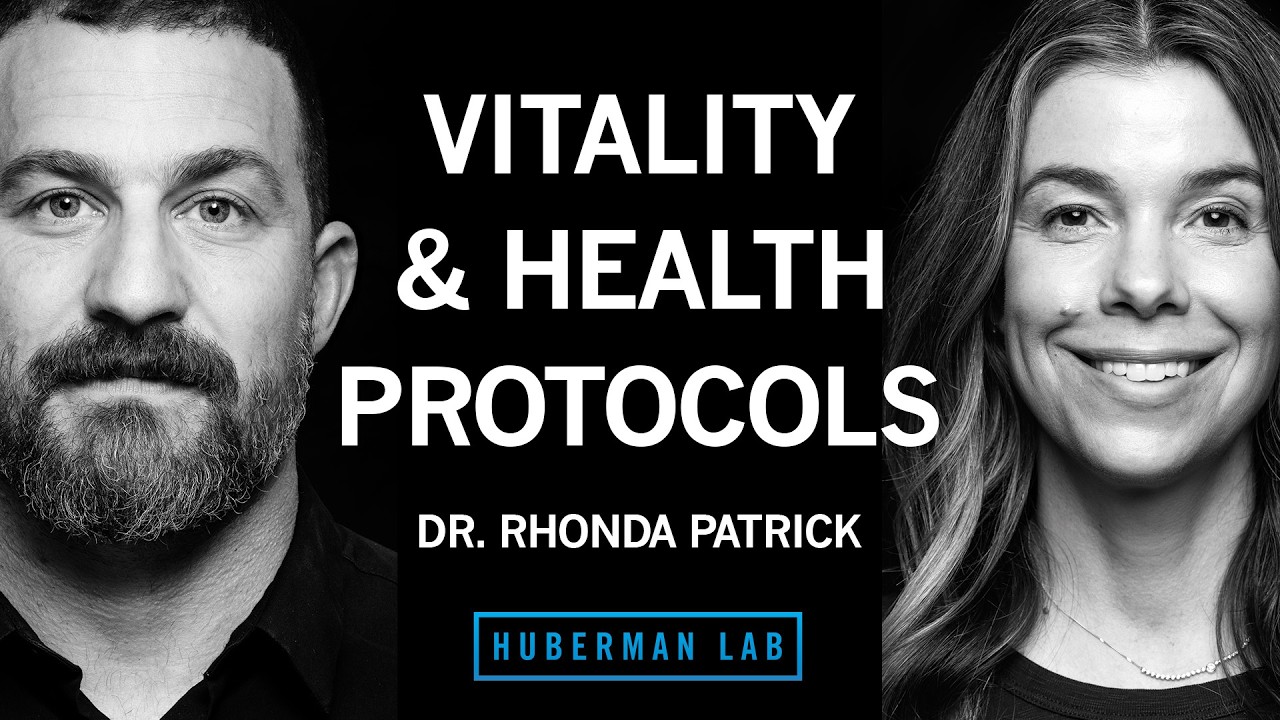
The Best Vitality & Health Protocols
Dr. Rhonda Patrick × Andrew Huberman
Dr. Rhonda Patrick joins Andrew Huberman for a comprehensive deep-dive into evidence-based health protocols covering exercise (VILPA, strength training), gut-inflammation cascades,…
Why This Episode Matters
Exercise as Hygiene
Exercise is non-negotiable — like brushing your teeth. Even 9 min/day of vigorous bursts cuts mortality 40%.
Inflammation & Gut
How food opens tight junctions, leaks LPS into your bloodstream, and drives atherosclerosis and depression.
The Metabolic Switch
Why cycling between fed and fasted states — at least once per day — is essential for repair, cognition, and fat loss.
Supplement Deep-Dive
Creatine at 10g/day for the brain, omega-3 as the top anti-aging compound, magnesium forms, and the experimental frontier.
Visceral Fat Danger
The hidden fat lining your organs that doubles early death risk — and how to lose it even without the scale moving.
Cortisol Reframed
Cortisol isn't the enemy — chronic slow-drip cortisol is. Hormetic stress spikes are how you build resilience.
Exercise Is Personal Hygiene
Rhonda describes exercise as part of her personal hygiene — something she absolutely has to do every day, just like brushing her teeth. She got this framing from Dr. Ben Levine, a leading cardiovascular exercise physiologist at UT Southwest.
Her weekly routine:
- 4 days of structured workouts (~5-6 hours/week total)
- 2 days CrossFit-style: 30 min strength + 30 min HIIT
- 2 days with friends: ~1h20 of rowing, assault bike, lighter lifts
- Runs: ~4-6 miles/week
- Weekends: family hikes, sprints up hills with her son and puppy
Even on travel days, she does 10 minutes of Tabata on a Peloton or bodyweight circuits in her hotel room — high knees, jumping jacks, air squats. The minimum effective dose is clear to her: something is always better than nothing.
"I don't bring my phone to my workout at all... I think social media is not really good for people to be honest."
The Exercise Intensity Spectrum
Rhonda emphasizes that all levels of physical activity count — from structured gym sessions to playing with your puppy. The key insight: you don't need an hour at the gym to see major health benefits.
VILPA = Vigorous Intermittent Lifestyle Physical Activity — the unstructured bursts measured by accelerometers in large population studies.
Exercise snacks: 10 body weight squats every 45 minutes over a workday regulates blood glucose better than a 30-minute walk.
9 Minutes That Change Everything
All-Cause Mortality
Cancer Mortality
Cardiovascular Mortality
These numbers come from large accelerometer studies on people who don't identify as exercisers — they're just playing with grandkids, sprinting for the bus, or taking the stairs. Even 3.5 minutes/day in women showed profound benefits on all-cause and cancer mortality.
Huberman: "If you were looking at mice and videotaping from above, which mouse am I going to be? All the mice are going up the automatic elevator."
10 Minutes of Vigorous Exercise → Brain Upgrade
Just 10 minutes of vigorous exercise immediately increases neuronal connections. Studies show an improvement in executive function — Rhonda cites roughly a 50 millisecond improvement in processing speed, which translates to a meaningful gain in cognitive performance.
Serotonin and impulse control: A study comparing low, moderate, and high-intensity exercise found that only the vigorous group significantly increased plasma serotonin. Higher serotonin correlated with improved impulse control — critical in a world of constant social media temptation.
Why vigorous matters: Low intensity (walking) and moderate (jogging) didn't move the needle on serotonin. It was the high-intensity group — the ones who couldn't talk during their intervals — that got the benefit. The intensity threshold matters.
Rhonda's minimum: even in a hotel room with no gym access, she does air squats, high knees, and jumping jacks for 10 minutes. She says: "My brain works better, I feel better, better mood."
Strength Training & Mental Toughness
Rhonda only started doing cleans and heavy compound lifts in February 2024 — and she still dreads them. But that's exactly the point. The hardest part of her routine became the most transformative.
"The biggest effect was on my brain and the ability to handle stress better... the rest of my day was not as hard."
Her strength protocol:
- Multi-joint lifts: front squats, back squats, deadlifts, cleans
- Straight bar deadlifts
- Rep schemes: 5 → 4 → 3 → 1 (working down to singles)
- 2-minute rest between sets
- Drop set of 10 reps at lighter weight after heavy work
- Accessories: dips, Bulgarian split squats
Huberman connects this to the anterior mid-cingulate cortex — the brain area that enlarges when you do things you don't want to do. It's hyperplastic throughout the lifespan and is the strongest anatomical correlate found in "super agers."
Protein: Less Obsession, More Training
The surprise take: Rhonda targets only 1.2-1.6 g protein per kg body weight — lower than the often-cited 1g per pound. She found that pushing for more protein led to consuming more total calories and gaining weight.
Her food sources:
- Homemade turkey burgers (a lot of them)
- Pasture-raised chicken
- Wild Alaskan salmon
- Grass-fed steak (filet mignon)
- Always paired with greens — sauteed collard greens, kale, salads
At 47, navigating perimenopause, she found the standard advice wasn't working for her body. The caloric surplus from chasing protein targets was counterproductive. Her solution: focus on training intensity, let protein appetite follow naturally.
"I think people should become more obsessed with training and less obsessed with protein. Like the protein will complement the training."
Gut Health → Inflammation Cascade
The gut-cardiovascular-brain axis is one of the most important and underappreciated pathways in health. Every time you eat, tight junctions in your gut transiently open — and LPS from gram-negative bacteria leaks into your bloodstream.
Refined carbs + saturated fat cause the worst LPS response. The immune system activates as if fighting a foreign invader — massive energy drain → lethargy after meals.
We carry about a gram of LPS in our gut. The question isn't whether it leaks — it always does — but how much and how often.
How LPS Drives Atherosclerosis
Rhonda explains a mechanism most people have never heard: LPS binds to LDL particles through lipid interactions. As LDL particles donate triglycerides and shrink into small dense LDL, the apo B protein gets obscured by the bound LPS — so the liver can't recycle them.
The foam cell pathway:
- Small dense LDL + LPS gets lodged in arterial wall
- Macrophages detect the LPS signal
- They think it's a foreign invader
- They try to engulf it but can't — it's not bacteria
- Macrophage gets stuck → foam cell forms
- This is the beginning of atherosclerosis
Why this matters:
- LPS injected into humans causes up to 50% increase in TNF-alpha inflammatory markers
- These individuals also experience depressive symptoms and social withdrawal
- People who don't respond to SSRIs often have high C-reactive protein — suggesting an inflammatory subtype of depression
The Postprandial Inflammatory Response
Why you feel sleepy after eating: When you eat, tight junctions transiently open. LPS leaks into the bloodstream. The immune system activates — and immune activation is enormously energy-consuming. That's the lethargy you feel.
The worst offenders:
- Refined sugar + saturated fat (together)
- Ultra-processed foods with additives
- Eating butter without a fiber matrix
- Large meals in general
Less inflammatory: whole foods, fiber-rich foods, quality protein + greens
The gluten nocebo study: People who believed they were gluten-sensitive were given bread without gluten — they still had terrible abdominal symptoms. The nocebo effect is real and can change immune signaling and brain response.
Celiac represents the extreme end: gluten opens tight junctions and they stay open — massive LPS leakage and systemic inflammation. For most people, it's a transient opening that varies by meal quality.
Inflammation Is at the Core of Aging
"If you're thinking about the molecular events that are leading to these hallmarks of aging which lead to the phenotypes and the diseases — type two diabetes, cancer, Alzheimer's disease — go upstream of that and the inflammation is at the core of it."
Sources of Inflammation
- Processed foods / LPS leakage
- Chronic psychological stress
- Poor sleep
- Visceral fat secretions
- Sedentary lifestyle
Anti-Inflammatory Levers
- Exercise (especially HIIT)
- Omega-3 fatty acids
- Fasting / metabolic switch
- Sulforaphane (NRF2 pathway)
- Quality sleep
Downstream Diseases
- Cardiovascular disease
- Type 2 diabetes
- Alzheimer's / neurodegeneration
- Cancer
- Depression (inflammatory subtype)
The Visceral Fat Danger
Visceral fat is the deep fat lining your organs — especially around the liver and intestines. Unlike subcutaneous fat (what you can pinch), visceral fat doesn't respond to insulin and acts like a rogue endocrine organ.
44% higher chance of cancer. People with high visceral fat have significantly elevated cancer risk across many types.
70% of women over 50 have high visceral fat. 50% of men over 50 do. Estrogen decline during menopause shifts fat storage from subcutaneous to visceral.
Waist proxy: Women ≥ 35 inches, Men ≥ 40 inches — associated with higher visceral fat. DEXA scan for accurate measurement.
You Can Gain Visceral Fat Without Gaining Weight
The 5-day study: Healthy young men ate 1,200-1,500 extra calories/day of high saturated fat + refined sugar. In just 5 days:
- Their brains became insulin resistant
- They gained visceral fat and fat around the liver
- They did not gain weight on the scale
Sleep deprivation study: Healthy men sleeping 4 hours/night for a couple weeks started gaining visceral fat with only about a pound of total weight gain. The vicious cycle: visceral fat → insulin resistance → cravings → more visceral fat.
What causes visceral fat gain:
- Caloric surplus (especially processed foods)
- Chronic elevated cortisol
- Sleep deprivation
- Hormonal changes (menopause)
- Sedentary lifestyle
How to lose it:
- Aerobic exercise + HIIT (most powerful)
- Caloric deficit
- Intermittent fasting
- Combination is key — Rhonda found the combo of fasting + exercise was what finally worked for her visceral fat at age 47
The Insulin Resistance Cascade
Visceral fat doesn't respond to insulin the way subcutaneous fat does. It keeps breaking down triglycerides into free fatty acids regardless of insulin signals — and because it surrounds the liver, those fatty acids go straight to the portal vein, antagonizing insulin receptors.
Step 1
Step 2
Step 3
The "lean but metabolically unhealthy" phenotype: You can have high visceral fat without looking overweight. These individuals exist and carry the same metabolic risks. Rhonda emphasizes you can gain visceral fat without gaining a pound on the scale.
Cortisol: Spike and Shut Off
Cortisol isn't the villain. It regulates ~20% of the human genome through two receptor types (glucocorticoid and mineralocorticoid). The problem is when the pattern is wrong.
Hormetic stressors (exercise, fasting, cold) produce a different biological response than chronic stress — they change receptor density in beneficial ways.
Chronic stress = slow drip of cortisol → receptors become resistant → lose anti-inflammatory benefits → immune dysregulation.
The Cortisol Narrative Got Twisted
Huberman traces how well-intentioned messages got contorted:
- Dr. Stacy Sims appropriately said some women shouldn't train fasted
- This became "women shouldn't train fasted" (overgeneralization)
- Lauren Keno Simple corrected: you can train fasted or not — it's preference
- Cold exposure was said to raise cortisol — but data actually shows it lowers cortisol while raising adrenaline and dopamine
Rhonda's approach:
"I listen to how I feel. That's exactly what I do... There are times when I wake up in the morning and I'm like, I need to eat something before I work out and I do."
The takeaway: cortisol spikes from exercise and fasting are beneficial hormetic stress. The goal is high in the morning, low at night. Getting your last hour of the day strongly parasympathetic is the critical lever.
Stop Eating 3 Hours Before Bed
New continuous blood pressure data: People who stopped eating 3 hours before bed had significantly lower blood pressure during sleep — the baroreflex dipping response activated properly. Heart rate dropped. This parasympathetic reset translated to roughly 20% lower risk of cardiovascular events like heart attacks.
The magnitude is comparable to first-line hypertension drugs — from a behavioral change alone. Courtney Peterson's early work showed blood pressure drops of ~10 mmHg from time-restricted eating.
Why eating late is problematic:
- Eating activates the sympathetic nervous system — an energy-consuming awake event
- Digestion takes ~5 hours to complete
- Melatonin rises 3 hours before natural bedtime, reducing insulin sensitivity
- Late-night carbs hit when your pancreas is winding down
Rhonda's protocol: She tries to stop eating by 7 p.m. and is asleep by 10:00. She's in bed by 9 or 9:30, allowing an hour to wind down. First meal usually around 11 a.m., sometimes noon.
Starches, Sleep & the Cortisol Connection
Huberman shares that he can't sleep well if starches are too low — he gets too wired. A new study confirmed what he'd been saying on the podcast for years: eating starches can improve sleep. The audience that mocked him for "gorging pasta and passing out" missed the point entirely.
The real scenario: Marathoners and ultra-endurance athletes would report terrible sleep. When asked about their diet: no pasta, no rice, pure low-carb. A bowl of rice or pasta at lunch fixed their sleep immediately.
The mechanism: The brain doesn't shut down well when cortisol is too high. Adequate starch intake during the day helps manage cortisol levels. Too few carbs + heavy exercise = chronically elevated cortisol = poor sleep.
Rhonda's starch sources:
- Oatmeal (including high-protein oats)
- Rice
- Homemade pastas (not the processed packaged kind)
- Sourdough bread occasionally
She avoids processed starches because they make her feel lousy and sleepy — that's the postprandial inflammatory response at work.
The Metabolic Switch
Dr. Mark Matson coined the term "metabolic switch" — the transition from burning glucose to burning fatty acids and producing ketone bodies. This happens ~11-12 hours after your last meal when liver glycogen depletes.
Ketones are energetically favorable — they generate less oxidative stress and take less energy to convert into ATP than glucose.
Beta-hydroxybutyrate activates BDNF (brain-derived neurotrophic factor) — critical for learning, memory, and synapse formation.
Why Rhonda Fasts for Her Brain
The cognitive benefit is her #1 reason for intermittent fasting. Beta-hydroxybutyrate increases GABA, balancing the excitatory glutamate. The result: a state she describes as feeling cognitively sharper and more focused in the morning.
Mark Matson's 5:2 study: Two days of severe caloric restriction (one 500-calorie meal) + five days of normal eating → massive cognitive benefits — 20% improvement in a battery of cognitive tests. He attributes it to ketones and their effect on GABA.
The fasting critics were partially right:
- Weight loss IS mainly from calorie restriction ✓
- But the metabolic switch provides unique benefits beyond calories
- If you're resistance training, you won't lose muscle
- You can eat more protein within your eating window
One metabolic switch per day — Huberman's framing. You can get it from:
- Fasting alone
- Exercise alone (high energy expenditure → ketosis)
- Both combined (Rhonda's approach)
- The point is: find your way to trigger it daily
Autophagy & the Repair State
Autophagy is the cell's cleanup process — clearing out DNA fragments, misfolded protein aggregates, and damaged organelles. It's not just a buzzword: we have basal autophagy happening at any given moment, and fasting + exercise increase it above baseline.
The measurement problem: The tissues most responsive to fasting-induced autophagy (liver, brain) aren't easy to biopsy in humans. Blood cells show limited response. Muscle biopsies confirm it's real in muscle tissue. But the human data remains limited.
The yin and yang:
We're obsessed with anabolic — muscle growth, protein synthesis, mTOR activation. But the body also needs the repair side:
- DNA damage repair
- Protein aggregate clearance
- Mitochondrial quality control
- You can't be in growth mode 24/7
Rhonda's balanced take: she doesn't claim massive autophagy benefits from her 16-hour fasts. She says you kind of have to trust the biology — we know autophagy is activated by fasting and exercise, and certain tissues (liver, brain) are especially responsive.
Exercise Offsets Sleep Loss
Rhonda's personal data: As a new mom wearing a continuous glucose monitor, she noticed her glucose response became nearly pre-diabetic from sleep deprivation. When she resumed HIIT classes twice a week, it almost completely negated the elevated fasting and postprandial glucose.
Longitudinal data: People sleeping fewer than 7 hours/night have higher all-cause mortality. But if they meet physical activity guidelines (75 min vigorous + 150 min moderate per week), they have the same mortality rate as people getting enough sleep.
Sleep → Metabolism cycle: A study measured metabolism during sleep via a breathing mask. The brain cycles through all metabolic substrates — there's a phase running on sugar, a phase that looks ketogenic. These systems get recalibrated. Disrupting sleep disrupts this recalibration.
Huberman's reframe on alcohol: Most negative effects of drinking are probably because of alcohol's devastating effect on sleep quality — not just its direct toxicity. Sleep is where metabolic recalibration happens.
Sedentary Is a Disease
"I would say being sedentary is a disease actually. That's something I mean people aren't thinking about it."
Cardiorespiratory fitness (CRF) is one of the best markers for longevity. If you have low CRF but no diagnosable diseases — no insulin resistance, no cardiovascular disease, no cancer — your all-cause mortality risk is as bad or worse than having cardiovascular disease, smoking, or hypertension.
Life expectancy gains from improving CRF:
- Low → Low-normal: +2 years
- Low → High-normal: +~3 years
- Low → High: +5 years
About 40% of people don't respond to steady-state cardio alone — mixing in HIIT helps.
Glutamine: Immune Cell Fuel
Rhonda became interested in glutamine through her graduate research — cancer cells survived glucose withdrawal because glutamine sustained them. She later learned glutamine is essential for T-cell activation and serves as a critical energy source for gut epithelial cells.
Endurance athlete studies: Marathon runners taking higher doses (~30g) of glutamine had lower incidence of respiratory tract infections. Glutamine feeds the immune cells that need activation during high physical stress.
Rhonda's protocol:
- 5g daily as baseline
- Ramps up to 15-20g (in 5g doses, not all at once) when her son is sick, during travel, or during cold/flu season
- Notes she "really doesn't get sick" anymore — but acknowledges it could be placebo combined with creatine
Cancer concern: Glutamine feeds cancer cells too. Rhonda's personal assessment: she wouldn't worry unless she had a known colon or liver tumor. She doesn't believe supplemental glutamine causes cancer — it just shouldn't be taken if a relevant tumor already exists.
NAC & the Oxidation Balancing Act
N-acetylcysteine reduced flu transmission significantly in at least one study where people were deliberately exposed — from the high 70s% down to the high 20s%. Huberman takes it when feeling run down or around sick people.
Rhonda's caution: NAC is a powerful antioxidant, and you don't want to blunt exercise adaptations. The burst of reactive oxygen species during exercise is beneficial — that's how you get the adaptation. Taking strong antioxidants close to exercise can short-circuit this.
Reductive stress — the opposite of oxidative stress. Too many reducing agents (NADH, NADPH, antioxidants) also has negative effects. You need the hormetic burst of oxidation followed by recovery, not a constant antioxidant shield.
The takeaway: Don't take NAC daily if you're training hard. Use it tactically when run down or exposed to illness. Don't take vitamin E supplements (the SELECT trial showed high-dose alpha-tocopherol increased prostate cancer risk). Same principle: don't cold plunge within 6-8 hours of resistance training.
Creatine: From Muscles to Brain
Muscle Benefits
Creatine phosphate → more ATP → higher training volume → more muscle protein synthesis. It's not directly anabolic — it lets you train harder.
Brain Benefits
At 10g/day, brain creatine levels start rising (shown by MRI). The phosphocreatine system has a frontal cortex bias — planning, working memory, executive function.
Under Stress
Sleep deprivation, TBI, cognitive decline — that's when creatine shines. At higher doses (~20-25g), sleep-deprived subjects performed better than their baseline.
Rhonda's protocol: 10g creatine monohydrate daily in two doses (morning). When traveling or sleep-deprived, she goes up to 20-25g. She says going from 5g to 10g made a noticeable difference in her cognitive endurance later in the day.
"I take 10 grams a day every day... if I don't have my 10 grams and it's only five, like I'll notice."
The Supplement Framework
"Do I want to be in the experimental or the control group?"
Why there aren't more studies:
Rhonda and Huberman address the "big pharma doesn't study it" myth directly. The real reason: there simply isn't enough NIH funding. Scientists aren't sitting around deciding to compare magnesium malate vs. bis-glycinate vs. L-threonate in 2,000 subjects. The money doesn't exist for it.
Huberman's 4 supplement categories:
- Food replacement — whey protein, protein bars
- General support — multivitamin, covering bases
- Specific effects — omega-3 for inflammation, creatine for brain
- Experimental maybe — NR, urolithin A, BPC-157
Omega-3: The Top Supplement
Rhonda calls omega-3 fatty acids the most powerful naturally occurring dietary compounds for resolving inflammation. Not just suppressing — resolving. DHA and EPA form resolvins and protectins that actively turn off the inflammatory response.
2g/day takes omega-3 index from low (4%) to high (8%). Prescription Lovaza provides the cleanest, most concentrated form.
High omega-3 index: 5-year increase in life expectancy and 90% reduction in sudden cardiac death.
Omega-3 + Vitamin D + Resistance Training = Synergy
The Swiss trial: Omega-3, vitamin D, and resistance training were tested alone and in combination. Only omega-3 alone slowed the epigenetic aging clock. But when all three were combined, the clock slowed by 3.8 months — translating to major functional outcomes.
Important caveat: 88% of participants were already physically active. Adding 30 min of resistance training 3x/week on top of that didn't move the needle alone. The omega-3 was the missing piece — because they clearly weren't eating enough.
Combined Effect
Reduction in invasive cancer risk when omega-3 + vitamin D + resistance training were combined
Omega-3s also improve cell membrane fluidity — critical for endothelial cells lining arteries, for receptor function in the brain (dopamine, serotonin transporters), and for cardiac flexibility. Trans fats do the opposite: they stiffen cell membranes.
Vitamin D: The Underrated Steroid Hormone
Vitamin D3 gets converted into an active steroid hormone that changes the expression of ~5% of the human genome. Both Rhonda and Huberman take about 5,000 IUs per day — and both emphasize that sunlight is still important for reasons beyond vitamin D production.
The magnesium connection: Half the US population doesn't get enough magnesium. The enzymes that convert D3 into its active hormone form require magnesium to function. This could explain why many vitamin D studies show null results — the conversion pathway is broken.
Vitamin D deficiency reversal: Severely deficient populations (e.g., obese African Americans) who supplemented with 4,000 IU/day for 6 weeks could actually reverse their epigenetic aging. Starting point matters enormously.
Huberman's anecdote: "I'm going to go into the grave. I actually want a little window over my grave so I can get morning sunlight. I'm just kidding, folks." — But the point stands: sunlight does far more than produce vitamin D.
Dr. Patrick's Full Supplement Stack
Rhonda's daily supplement regimen, organized by level of conviction:
Core (strong evidence):
- Omega-3: ~2g/day (prescription Lovaza)
- Vitamin D3: 5,000 IU/day
- Creatine monohydrate: 10g/day
- Magnesium glycinate (for sleep)
- Multivitamin (Centrum Silver-type)
Targeted:
- Glutamine: 5g baseline, up to 15-20g
- CoQ10 (ubiquinol form)
- Sulforaphane precursor (Avmacol)
- Urolithin A (Mitopure)
- Nicotinamide Riboside (NR)
Magnesium: Which Form Matters
Mg Bis-Glycinate
- Best studied for sleep
- Glycine component adds sleep benefit
- Rhonda's primary form
- Good systemic magnesium coverage
Mg L-Threonate
- Crosses blood-brain barrier more readily
- Limited human data on cognition (mostly animal)
- Rhonda is newly experimenting with it
- Concern: may not cover whole-body magnesium needs
Other Forms
- Malate + Taurate: sometimes used for sleep
- Requirements: Women 300-350mg, Men 350-400mg/day
- Athletes may need 20% more (sweat losses)
- Magnesium is a cofactor for 3,000+ pathways
The vitamin D connection: Magnesium is required to convert vitamin D3 into its active steroid hormone form. Half the US population doesn't get enough magnesium — which could explain why many vitamin D supplementation studies show null results. The conversion enzymes aren't working properly.
Multivitamins: The COSMOS Surprise
Three large randomized controlled trials (part of the COSMOS trials) in adults 65+ taking a standard Centrum Silver multivitamin for one year:
Global Brain Aging
Episodic Memory Aging
Rhonda's reaction: anyone who tells you multivitamins are useless is wrong. These were not fancy supplements — they were affordable, available-at-Walmart vitamins. Three trials, consistent effect. For older adults especially, this is a strong recommendation.
Why it works: Most people have micronutrient gaps. You may not notice them day-to-day, but over time these gaps accumulate — especially in brain-critical nutrients. The multivitamin isn't doing anything magical; it's filling holes that whole foods alone weren't covering.
Sulforaphane: The Detox Pathway
Sulforaphane (from cruciferous vegetables, especially broccoli sprouts) is the most powerful naturally occurring activator of the NRF2 pathway — a master switch for detoxification genes. Rhonda takes a glucoraphanin precursor (Avmacol) because it's more stable.
Proven in human studies:
- 60% excretion of benzene (carcinogen from air pollution) within 24 hours in Chinese studies
- Powerfully increases glutathione in both plasma and brain
- Deactivates phase-one biotransformation enzymes (those that turn pro-carcinogens into carcinogens)
The BPA connection: The same NRF2-activated enzymes that detoxify benzene also make BPA water-soluble for excretion. No human study yet, but animal data shows sulforaphane protects against BPA toxicity. Rhonda gives it to her whole family for this reason.
13 studies now using the Avmacol form specifically. Rhonda calls sulforaphane her answer to the unavoidable reality of microplastics and environmental toxins — you can't eliminate exposure, but you can boost your body's ability to process and excrete them.
The Experimental Frontier
Urolithin A (Mitopure)
- Stimulates mitophagy — selective cleanup of damaged mitochondria
- RCTs show it works in blood cells and muscle
- Emerging data on endurance performance and immune cell "rejuvenation"
- Rhonda: "I'm the experiment group"
Nicotinamide Riboside (NR)
- Increases NAD+ for mitochondrial health
- Not in Rhonda's "core" tier — wouldn't make budget cuts
- Huberman takes sublingual NMN; notes hair and nails grow faster (which slightly worries him)
- Concern: does it grow tumors faster too?
BPC-157
- Tons of animal data on cartilage/nerve growth
- Basically zero human data
- The one human study was... BPC enemas
- Rhonda's position: check safety first, short defined period, good source, qualified prescriber
Both agree: growth-promoting compounds (NMN, growth hormone secretagogues) carry a theoretical cancer risk — if you have a tumor you don't know about, you might be feeding it. Huberman tried semorelin, but it spiked his PSA and nuked his REM sleep. He stopped.
Sauna, Seed Oils & Rapid-Fire
Sauna protocol:
- ~5 nights/week (before her current pause)
- Mix of dry sauna and hot tub
- Temperature: ~180°F, Duration: ~20 min
- Often with her husband — "our time" under the stars
- Hot tub = sauna for benefits — it's the deliberate heat exposure that matters
Seed oils: Rhonda avoids them — mainly because (1) avoiding seed oils means avoiding processed foods, and (2) heating polyunsaturated fats accelerates oxidation. The concern isn't that seed oils are toxic — it's that olive oil and avocado oil are superior options.
Creatine for kids: Data shows it improves agility in young athletes and appears safe. Rhonda gives her son 2.5 grams per day.
Why Rhonda "ruined" bananas: Bananas contain an enzyme that breaks down polyphenols — specifically the ones in blueberries that improve cognition. Don't mix banana and blueberry in your smoothie.
Microplastics: Rhonda is less concerned about microplastics than about not getting the right micronutrients. The body can detoxify associated chemicals, especially with NRF2 activation. Practical wisdom: is the stress of avoiding them worse than the actual exposure?
Alert but Calm: The Brain State Everyone Wants
Rhonda describes her ideal cognitive state from fasting-induced ketosis: "alert but calm." Beta-hydroxybutyrate increases GABA, quieting the chitter-chatter in the brain while maintaining focus. She experienced this most clearly during her experiments with a ketogenic diet.
Why nicotine is so addictive: It produces exactly this "alert but calm" state. Huberman notes that young people are taking 9mg doses, 8 times per day. They didn't start there — tolerance builds fast. He gets a throat-clearing tic from muscarinic receptor activation within days.
Better alternatives for "alert but calm":
- Fasting-induced ketosis → GABA increase
- Alpha GPC (600mg) — increases energy + improves REM sleep
- Creatine for sustained cognitive energy
- Good sleep (the WashU study showed ADHD meds mainly restore alertness to the level you'd get from proper sleep)
Alpha GPC secret: One of the few compounds that can increase late-day energy without disrupting sleep. It actually improves REM sleep. Huberman takes 600mg when he needs to work out or focus after 2 p.m.
Learning Keeps the Brain Young
Huberman observes that in fields like math and physics, people tend to peak with contributions early (the Fields Medal is given to those under ~40). But biologists who took good care of themselves are known to make great discoveries and stay cognitively sharp well into their 70s and 80s.
Dr. Bruce Ames — Rhonda's late mentor — claims some of his best work was done in his late 80s. He passed away at 96, still intellectually engaged. The constant novelty of learning new biology keeps activating BDNF, increasing synaptic connections and neuroplasticity.
The learning process itself is neuroprotective — whether it's biology, languages, or any subject you're passionate about. The novelty drives brain-derived neurotrophic factor, which is critical for keeping the brain younger.
Understanding mechanism drives behavior change: Both hosts agree that knowing why something works makes you more likely to do it. When you understand that LPS binds to LDL and starts atherosclerosis, or that omega-3s form resolvins, the behavior becomes anchored in logic — not authority.
"The secret is context. The way to remember something is context."
How to Evaluate Evidence
Don't ignore small studies. When Rhonda first published on sauna benefits in 2014, all the studies had N of 10 or smaller. People criticized the sample sizes. Now the evidence base is massive and validates every early signal.
Rhonda's framework: Look at the totality of evidence — animal data for mechanisms, small human studies for signal, observational data for patterns. Don't hedge all bets on one study, but don't dismiss emerging patterns either.
The funding reality: There's barely enough NIH money to fund current research. Scientists aren't avoiding supplement studies because "big pharma" blocks them — there simply isn't money to run large RCTs on magnesium forms or creatine for cognition. A 1% NIH budget increase doesn't change this.
The practical filter:
- Is it safe? (Check this first — always)
- Do I want to be in the experimental group?
- Can I afford to be in the experimental group?
If safety clears, the rest is personal risk tolerance and budget.
核心金句
"Exercise is part of my personal hygiene... I absolutely have to do exercise just like I have to brush my teeth."
— on exercise as daily practice
"I think people should become more obsessed with training and less obsessed with protein."
— reframing the protein obsession
"I would say being sedentary is a disease actually."
— on mortality risk of low CRF
"The inflammation is at the core of it... go upstream of that and the inflammation is at the core."
— on inflammaging as root cause
"I listen to how I feel. That's exactly what I do."
— on training fasted vs. fed
"Do I want to be in the experimental or the control group?"
— Huberman, on evaluating supplements
"I take 10 grams a day every day... if I don't have my 10 grams and it's only five, like I'll notice."
— on creatine for brain function
"The secret is context. The way to remember something is context."
— Huberman, on mechanisms driving behavior
"It's about the habit... I don't freak out about it because it's about the habit."
— on flexibility within consistent practice
Health Is a Daily Practice, Not a Destination
"It's about the habit... there are days when I just like I can't train fasted and there are days I wake up and I have to eat... and I don't freak out about it because it's about the habit."
Dr. Rhonda Patrick × Andrew Huberman · Huberman Lab Podcast