Extreme Harness · Engineering
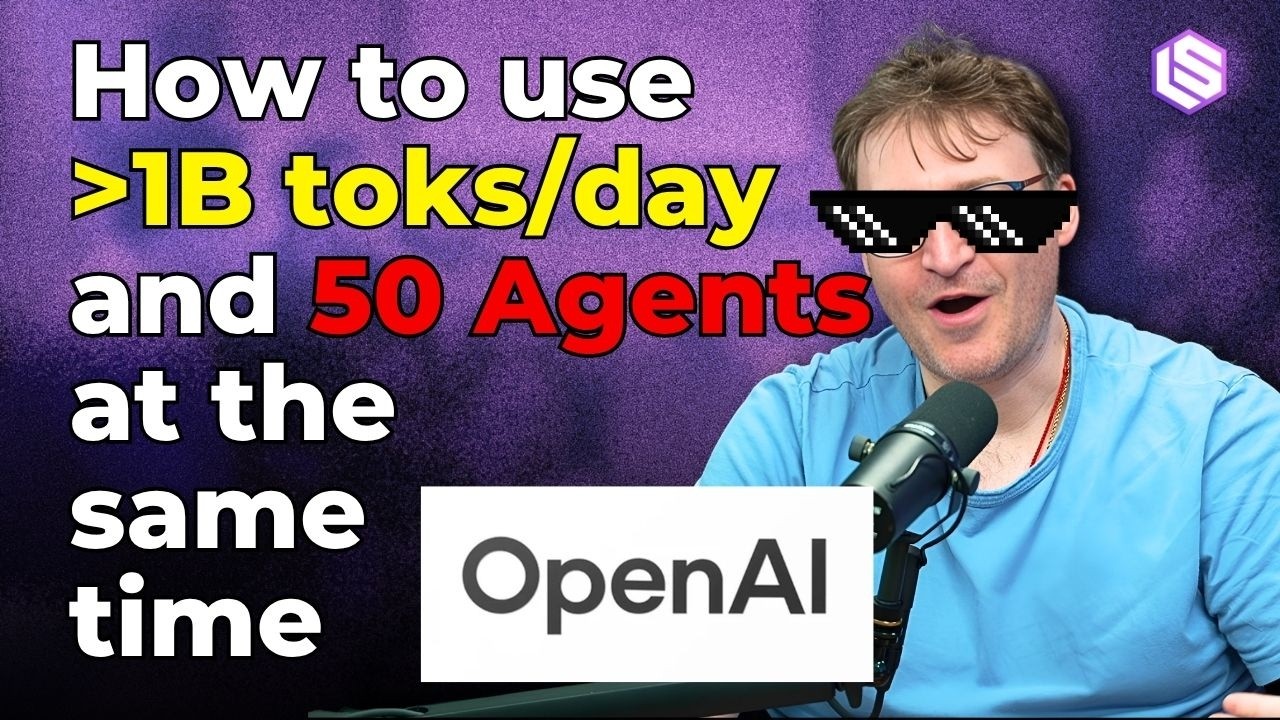
Ryan Lopopolo 在 OpenAI Frontier 用一个 "out there" 的约束做了 5 个月的实验:
Ryan Lopopolo 在 OpenAI Frontier 用一个 "out there" 的约束做了 5 个月的实验: 3 个工程师, 1M LOC, 1500 PRs, 他自己一行代码都不写. 这一小时他把这套打法所有的 ratchets 全摊开: 一分钟构建、$land 自动合并、Ghost Libraries、Symphony 用 Elixir、…
这期访谈里的八条主线
逼自己变成 tech lead
vs. 同步的人类注意力
背景 shell 的副作用
tech tracker、quality score
fix flakes、过 CI、merge
Symphony 用 Elixir 写
"code is free"
Rust scaffold 包住 Codex
开头是一句最反直觉的话:"只要我写一行代码,整个实验就没意义。" 后面所有 SDLC 决定都是这一个约束推导出来的。
实验的初始条件
Ryan 所在团队叫 Frontier Product Exploration,给 OpenAI Frontier (企业平台) 探索新产品形态。
被给了 "some space to cook"。
"I started with kind of a out there constraint to not write any of the code myself."
理由:如果想做能帮企业员工干活的 agent,那它得能干 Ryan 自己干的所有活。
结果:5 个月、3 个人、约 1M LOC、约 1500 PRs、0 行 Ryan 写的代码 ——
而且比他自己写要快。
第一个半月:10× 慢
最早用的是 Codex Mini(Codex CLI 的第一版),Ryan 形容:
"Quite a visceral feeling to ask the model to build you a product feature. And it just not being able to assemble the pieces together."
由此推出第一条核心心法:
当模型卡住,不要替它写代码 —
"double click into it, build smaller building blocks",
然后让它把零件再组合起来。
"Honestly, the first month and a half was 10 times slower than I would be."
"Because we paid that cost, we ended up getting to something much more productive than any one engineer could be — we built the assembly station for the agent."
倒转:先 spawn agent,再让它装环境
旧 paradigm: 先布置环境(容器、依赖、stack),再把 agent 丢进去
新 paradigm: 入口就是 Codex。Codex 拿到 skills + scripts 后自己决定要不要启动 stack,设环境变量,把 app 指过去。
原话:"instead of setting up an environment to spawn the coding agent into, instead we spawn the coding agent, like that's the entry point."
为什么能这么做:reasoning 模型与 GPT-4o 的根本区别 ——
"these models could not think so you had to put them in boxes with a predefined set of state transitions."
现在不必。
一分钟构建:用 agent 的耐心反推架构
GPT-5.3 加了 background shells —— agent 可以发命令到后台、继续工作。代价是它"less patient, less willing to block"。
所以构建必须做到 under a minute。"One minute was just a nice round number and we were able to hit it."
构建工具一路换:Makefile → Bazel → Turbo → Nx。换完就停在那 —— 因为快了。
swyx 称之为 build-time ratchet:"you're forcing build time discipline, because if you don't, it'll just grow and grow." Ryan: "That's right."
能这么换,是因为没有人会有 build 偏好 —— "this is not a thing I would expect to be able to do in a code base where people have opinions."
真正稀缺的资源:同步的人类注意力
"The model is trivially paralyzable, right? As many GPUs and tokens as I am willing to spend, I can have capacity to work with my codebase."
tokens are cheap、并行无上限。
"The only fundamentally scarce thing is the synchronous human attention of my team. There's only so many hours in the day — we have to eat lunch."
Ryan 自己:"I would like to sleep, although it's quite difficult to stop poking the machine."
推论:把 SDLC 想成 systems thinking。问"agent 在哪犯错?我时间花哪去了?怎么以后不花?"
然后把这部分解决方案固化下来。
Code review 已经 post-merge 了
Ryan 把自己当成 group tech lead 一个 500 人组织:
他用 post-merge 看到的 sample 去推断"团队在哪里挣扎"、"我该把注意力转去哪"。
Models fundamentally crave text
所有 non-functional requirements 都被翻译成文本,prompt-inject 给 agent。
原话:"the models fundamentally crave text. So a lot of what we have done here is figure out ways to inject text into the system."
触发示例: 被 page 了 —— 缺一个 timeout —
Ryan 让 Codex 加 timeout,同时更新 reliability docs
"all network calls must have timeouts"。
同一份 docs 同时给 root coding agent / 代码 review agent / test 蒸馏 agent
—— 收窄"可接受代码"的宇宙。
工程层面:在 ticketing 系统出现前,他们就用 markdown 文件追踪 follow-up,cron 上 spawn agent burn down。
在 "skills" 出现之前,他们重发明了 skills
结构:~100 行 AGENTS.md 做目录页 + 几个独立的 skill markdown。
Vibhu 提到 core beliefs.md / tech tracker / quality score。
tech tracker / quality score: 一张 markdown 表,做成 hook 让 Codex
review 所有 business logic,对照已记录的 guardrails,自己 propose follow-up。
core beliefs.md 里有:团队成员、当前在做什么产品、谁是 end customer / pilot customer、12 个月的 vision。
"in our code base, we have, I think, six skills. That's it."
不够用的时候第一反应是改现有 skill,而不是加新 skill。
顺手发现:这套东西做完后,OpenAI 的 Codex 团队把它产品化成了 skills。
swyx:"you reinvented skills from first principles." Ryan:"skills did not exist when we started doing this."
PR review agent:bullying 的故事
"Initially the Codex driving the code author was willing to be bullied by the PR reviewer, which meant you could end up in a situation where things were not converging."
"Bias toward merging the thing"、"not surface anything greater than a P2 in priority"。
给 code authoring agent defer 或 push back 的选项 ——
"file it to the backlog, pick it up in the next fix-it week."
$land:把 PR-to-main 全交给 agent
Ryan 写了个 skill 叫 $land,让 Codex 完成整条 merge 路径,原话逐字:
"push the PR · wait for human and agent reviewers · wait for CI to be green · fix the flakes if there are any · merge upstream · if the PR comes into conflict, wait for everything to pass · put it in the merge queue · deal with flakes until it's in main"
关于 work trees:Cursor 在另一期访谈说要去掉 work trees(太多 merge conflicts)。Ryan 反对:
"The models are really great at resolving merge conflicts. I almost don't care that there are merge conflicts."
他的 release flow:因为是 native app(Electron),不是 continuous deploy ——
还是有人审 release branch + smoke test。但 main 完全是 agent merge 进去的。
December → January:3.5 → 5–10 PR / engineer / 天
大家假期回来 + GPT-5.2 发布
人脑变成 context switcher
"Where are the humans spending their time? They're spending their time context switching between all these active tmux panes to drive the agent forward."
推论:再写一层东西把人从 loop 里拿出去 —— 这就是 Symphony 的起点。
Ghost Libraries:把软件作为 spec 分发
"the way we distribute it as a spec, which I think folks are calling
Ghost Libraries on Twitter."
构造 spec 的流程: 在 proprietary repo 让 Codex 读完→
写一个 spec → 起新 repo → 一个 disconnected Codex 按 spec 实现 →
另一个 Codex review 实现 vs upstream,更新 spec 让它diverge less → 循环。
"loop over and over Ralph style until you get a spec that is with high fidelity able to reproduce the system as it is."
顺便观察到:很多人直接把这篇文章扔给 Codex,说"make my repo this",
"it was wildly effective". 文章本身就是 spec。
Symphony 选 Elixir 不是 Ryan 的偏好 — 是模型选的
swyx 问:"为什么是 Elixir?"
Ryan:"the elixir manifestation here is just a derivative. Is it a model chosen?" —— 是。
模型挑 Elixir 的理由:
"the process supervision and the gen servers are super amenable to the type of process orchestration that we're doing here."
每个 task 是一个小 daemon。
关键点:因为没有人在 loop 里,
Ryan 自己会不会写 Elixir 也不重要:
"My own personal ability to write or not write elixir doesn't really have to bias us away from using the right tool for the job."
PR 被人类 review,结果是"either mergeable or it is not"。
如果不行:
"The elixir service will completely trash the entire work tree and PR and start it again from scratch."
然后:问 "为什么是 trash?" → 把答案塞回 skill 文档 → 下次不再犯。
一个"做了但其实不需要做"的故事
App 部署给第一批 ~12 个内部用户后,性能问题 —— 让他们 export trace tarball。
on-call engineer 花了一下午,用 Codex 写了个漂亮的 Next.js 本地 devtool —— 拖拽 tarball、把整条 trace 可视化。
"Took an afternoon, but none of this was necessary. Because you could just spin up Codex and give it the tarball and ask the same thing."
错误的优化方向:optimize for human legibility of debugging。
"It kept him in the loop unnecessarily."
正确的方向:人根本不该看 trace 可视化 ——
"I wouldn't expect to be looking at the traces in the first place because I'm not gonna write the code to fix them."
End of bullshit plugins
OpenAI 董事长 Brett Taylor 在播客上说 "software dependencies are going away"。
Ryan: "A hundred percent. A hundred percent agree."
"A couple thousand line dependency is a thing that we could in-house no problem. Call it an afternoon of time."
而且大部分 generic 代码可以剥掉,只留你真用到的那部分。
swyx 的命名: "I've been calling this the end of bullshit plugins."
开源时为了 accept everything、be liberal —— 结果 bloat + 兼容性税。in-house 后 Codex Security 直接 review 你 vendor 进来的代码,比 patch upstream 摩擦低得多。
MCP?Ryan 不太信
"With MCPs, I'm pretty bearish on, because the harness forcibly injects all those tokens in the context, and I don't really get a say over it. They mess with auto-compaction. The agent can forget how to use the tool."
"There's probably only what, three calls in playwright that I actually ever want to use."
但用 MCP 接进来就要付全套的 token。
"Somebody vibed a local daemon that boots playwright and exposes a tiny little shim CLI to drive it."
更广义的结论:CLI > MCP。"the CLIs are nice 'cause they're super token efficient and they can be made more token efficient really easily." — 用 --silent、shell 包一层只输出 failing tests。
Agent 怎么"看"UI:Rasterize
"Agents do not perceive visually in the same way that we do. They don't see a red box, they see red box button. They see these things in latent space."
原话:"If we wanna actually make it see the layout, it's almost easier to rasterize that image to OCR and feed it in to the agent."
500 NPM packages,给一个 7 人团队
"We have such a rigid, like 10,000 engineer level architecture in the app because we have to find ways to carve up the space so people are not trampling on each other."
具体形式:500 NPM packages。
"It's like architecture to the excess for what you would consider, I think, normal for a seven person team."
每个人实际上等于 10 到 50 个 agent。
"If every person is actually like 10 to 50, then the numbers on being super, super deep into decomposition and sharding and proper interface boundaries make a lot more sense."
另一面:daily standup 是 45 分钟。
"We have a daily standup that's 45 minutes long because we almost have to fan out the understanding of the current state."
自我改进:把 session log 倒进 blob storage
单人用法:"you can just point [Codex] at its own session logs to ask it to tell you how you can use the tool better."
swyx 称之为 "introspection"。
团队用法:
"we're actually slurping these up for the entire team into blob storage and running agent loops over them every day to figure out where as a team can we do better."
所有信号都是 text:失败的 build、PR comment、被改过的代码 ——
"these are all signals that mean at some point the agent was missing context."
"My job is to figure out ways to funnel text from one agent to the other."
回到那条主线:models fundamentally crave text。
所有"工程师工作"在这里都被翻译成
text routing 问题。
swyx 的呼应:Karpathy 的"English is the hottest programming language"
—— 不只是 prompts,是 feedback 通道本身。
模型今天还不能做什么
"They're definitely not there on being able to go from new product idea to prototype single one shot."
Ryan 自己也承认 "I'm just not good at it" —— 在白纸场景需要同步互动来"挤出"上下文。
"the gnarliest refactorings are the ones that I spend my most time with — the ones where I'm interrupting the most."
"double-clicking to build tooling to help decompose monoliths."
方向感:一个月内从"low complexity tasks"扩到"low complexity 和 big tasks"。
"Don't bet against the model." 现在还做不好的地方,下一个版本极可能能做。
所以 Ryan 给自己留的工作只有:pure white space + 最深的 refactor。
Spark vs reasoning:他还没想好怎么用 Spark
找到的用法: 把 PR comment 这种轻反馈"transform into a lint" ——
ESLint infra 已经在了,Spark 把人类 feedback 编成 lint rule,"anti-fragile healing tasks"。
GPT-5.4 的两个真实改变:① 第一次合并了 top-tier coding + reasoning;② 1M context —— "the more tokens you can spend on a task before compacting, like the better you'll do."
整期最深的洞见:on-policy harness
swyx 抛了一个 framing:harness 的方向到底是 "训进模型" vs "做更厚的 wrapper"?
Ryan 的答案:他们这套 harness "running tests is a good part of what it means to write reliable software",所以模型变好它也不会过时。
反例:"If we were building an entire separate rust scaffold around Codex to restrict its output, that I think would be like additional harness that would be prone to being scrapped."
swyx 类比 RL 里的 on-policy vs off-policy:"you should build an on-policy harness, which is already within distribution and you modify from there."
Ryan:"That's right."
判断准则:你的 guardrail 是不是"good engineering"?是 → 留着。是不是为了"约束这一代模型的某个缺陷"?是 → 下一代上就被丢。
Frontier:把这一套打包卖给企业
定位:"Frontier is the platform by which we want to do AI transformation of every enterprise, from big to small."
三个 hook:
- plug 进公司的 IAM
- plug 进 security tooling
- plug 进 workspace(连接器)
Agents SDK + Codex Harness 提供 file attachments / containers / Shell tool —— 作为 "works by default harness"。
谁是用户?
① 一线员工 —— 在自己的工具表面用 agent;
② GRC / governance / security / AI innovation office —— 通过 dashboard 看 agent 行为轨迹。
语义层:Frontier 同时发了 internal data agent ——
让 agent 能理解公司数据本体(什么是 revenue、什么是 active user)。
swyx:"It's actually really hard for humans to agree on what revenue is."
Brett Taylor 评论那篇 harness 文章 —— Ryan:"Yeah, he's reading your articles as well."
一个反常的"skill":deep-fried memes
"We have skills for how to properly generate deep fried memes and have Ghibli culture in Slack. Because with the Slack ChatGPT app that you're able to use in Codex, I can get the agent to shit post on my behalf."
"It's part of humor — humor is part of AGI."
humor 是一个高密度的智力测试 —— 把很多 context 压缩到几个词。
"it's the memes."
GPT-5.4 第一次能做到他们 in-house 文化里的"梗"水平。
背后的真原则:所有部落知识 (memes、playbook、文化) 都该写成 skill / 喂给 agent ——
让 ChatGPT 也学会团队 meaning culture,这样 Frontier 才能跨工具传递 context。
把哲学浓缩成一句话:"just do things"
整集的 catch-phrase 出现了两次:
"You can just codex things, you can just prompt things. It's a glorious future we live in."
"You can just do things. That's the line for the episode."
潜台词: 不要先去问"这能不能做、有没有人做过、是不是产品里能找到的功能"。
启动一个 Codex,告诉它你想要什么,让 it cook —— 失败了再加 skill / docs / guardrail。
顺手提的两个数
swyx 的观察 —— 现在每次 model release 都附带一次"Codex 大跃迁":GPT-5.3 → Spark → GPT-5.4 在一个月内。
Ryan 笑:"The poll markets would be very upset" 如果下个月还有 GPT-5.5。
核心金句
"The model is trivially paralyzable. The only fundamentally scarce thing is the synchronous human attention of my team."
"The models fundamentally crave text. A lot of what we have done here is figure out ways to inject text into the system."
"The first month and a half was 10 times slower than I would be. But because we paid that cost, we ended up getting to something much more productive than any one engineer could be."
"The models are really great at resolving merge conflicts. I almost don't care that there are merge conflicts."
"With MCPs, I'm pretty bearish on, because the harness forcibly injects all those tokens in the context, and I don't really get a say over it."
"My job is to figure out ways to funnel text from one agent to the other."
"You should build an on-policy harness, which is already within distribution and you modify from there." (swyx framing, Ryan: "That's right.")
"You can just do things. That's the line for the episode."
You can just
codex things.
Latent Space × Ryan Lopopolo (OpenAI Frontier) · 2026
1M LOC · 1500 PRs · 5 months · 3 people · 0% human code