The Art of Influence
The Single Most Important Skill Left That AI Can't Replace
Jessica Fain, VP Product at Webflow and former chief of staff to two CPOs at Slack, unpacks the art and science of influencing executives — from tactical meeting techniques to buil…
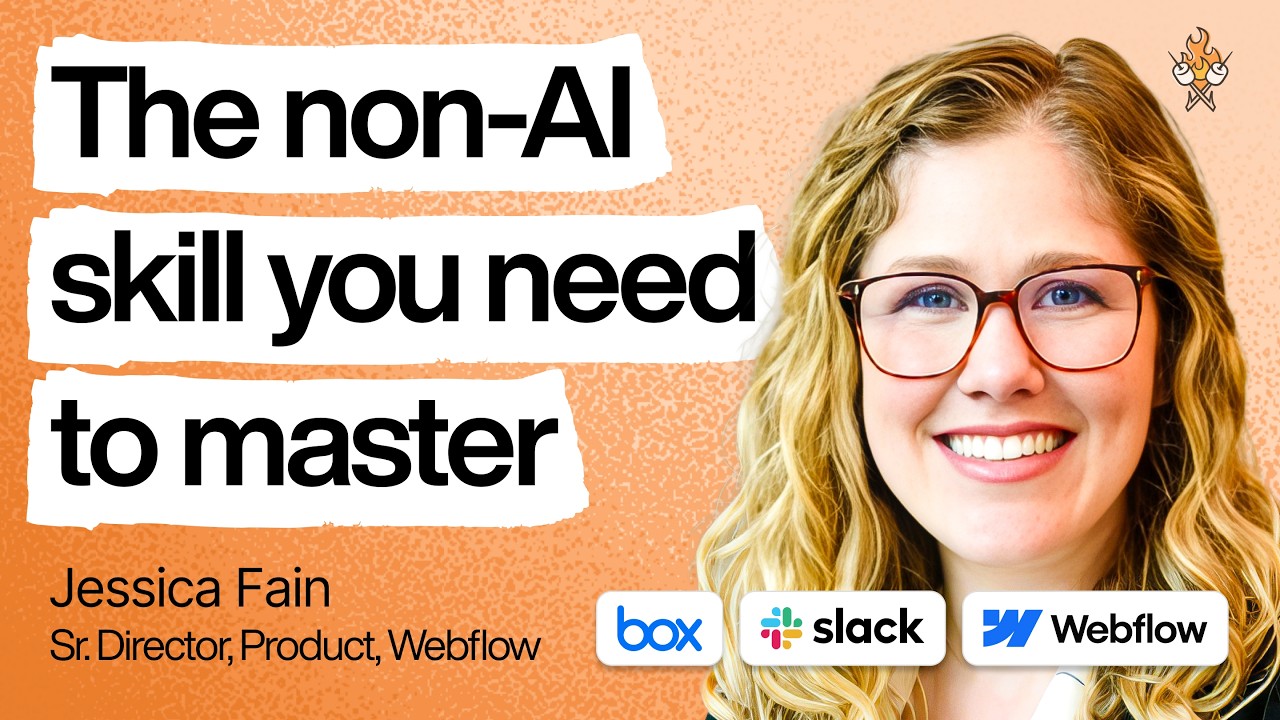
Why This Episode Matters
Influence ≠ Politics
Why getting buy-in for good ideas is your actual job — not manipulation
The Exec Brain
How executives actually make decisions — and why you're misreading them
Tactical Playbook
Specific phrases, meeting structures, and presentation techniques that work
AI Changes Everything
Why influence becomes the 10x skill as execution gets commoditized
Trust Building
Kill projects, shrink the change, and follow subtle exec threads
Authenticity
You don't need to be someone else — every personality type can influence
Jessica's Journey: From IC PM to Chief of Staff
The frustration: As an IC PM at Slack, some of Jessica's ideas got funded and backed, while others she deeply believed in "died on the vine." She couldn't figure out how decisions were being made behind the scenes.
The bold move: Eight and a half months pregnant, she approached incoming CPO April Underwood and said she'd love to be her chief of staff. After maternity leave, she got the role — and later served as chief of staff to Tamar Yehoshua (now CPO at Atlassian).
The revelation: People completely misunderstand how executives make decisions. Instead of understanding where the exec is coming from, PMs center their own desires, their own motivations, and their own slice of the world.
"I was so confused and frustrated honestly because I felt like, hey, I really get this user base. I really understand what's going to move the ball forward."
The Strobe Light Calendar
Executives are not thinking about your project.
You prepped for 2-3 weeks for this review
They haven't thought about you since the last meeting — "they may not have gone to the bathroom today"
The fix: Take 30 seconds to set context. Why are we here? What happened last time? Why does this matter?
The PM Trap: Centering Yourself Instead of the Exec
What PMs Do Wrong
- Go in looking for approval for their plan
- Prove they did their homework (boring the exec)
- Center their own ideas, own motivations, own slice of the world
- Treat it like a rubber stamp
What Great PMs Do
- Go in to learn and strengthen their plan
- Use the exec's domain expertise and context
- Think about how to get the best out of the exec
- Build product alongside them, not despite them
"As product managers, one of our best sets of skills is curiosity and empathy and trying to understand our users. But the moment that we're talking to an executive, we forget those skills and those talents."
Politics vs. Influence
This isn't about being manipulative. It's the opposite.
Politics = manipulating outcomes and people for your own gain
Influence = increasing the odds that your good ideas survive
Jessica's reframe: treat stakeholder conversations as discovery interviews — a way to strengthen your ideas, not sell them.
Noah Weiss (CPO of Slack) kept a notebook of things he learned from Stewart Butterfield — not to show off, but for "genuine learning and growth of his own ideas."
"It's Not My Fault, but It Is My Problem"
The Ego Trap
People say: "Oh, they just don't get it. They don't see what I see. They're not in my meetings. They don't know how hard this is."
The Growth Mindset
If you respect them, if you think they got to their position because they learned and developed real skill — take the feedback, ask questions, and don't treat it like a rubber stamp.
"If you don't respect that person, if you don't believe they know something you don't, you need to quit. You need to go work somewhere else."
You Get Paid to Have an Opinion
You are the domain expert. Your executive is looking for you to be the deepest person in the room. Bringing your expertise to bear is absolutely crucial.
Have a customer story in your back pocket. Elon Frank (CPO at Checker, ex-Slack) always had a customer anecdote ready: "I was just on site last week with so-and-so and they said..." He brought enterprise expertise that many Slack execs didn't have.
Marry expertise with curiosity. When you hear something you disagree with, ask: "That's so interesting. What led you to believe that?" This is genuinely curious — not passive-aggressive. It co-creates with the person who offered the opinion.
Key insight: Execs are so good at seeming certain. They say things with confidence because so much of their work is making ultra-fast decisions with little information. But if they have a growth mindset, you can help them unpack why they believe something.
How to Present Your Ideas
Don't lead with your homework. Lead with your recommendation.
Anti-pattern: "We talked to 16 participants from 15 geos and this is statistically significant..." — the exec is bored, reaches for phone.
Pattern: Start with your recommendation. Show 2-3 options. Put evidence in appendix.
"Stuart + 2 more": After a design review with Stewart Butterfield, do exactly what he asked for — plus two other versions you feel good about. Then debate the merits.
The 30-Second Meeting Opener
Step 1
Step 2
Step 3
Step 4
Pro tip for doc-based meetings: After the silent read, bubble up a "themes for discussion" section. Anything factual (timeline, staffing) can be answered offline. Spend the live time on the most controversial and spicy topics — that's where you get the real insight.
Don't Ask "What's Top of Mind?" — Ask Spicier Questions
Hot take from Jessica: "What's top of mind?" has become a generic, uninteresting trope. It's lost its firepower.
Better Questions
- "Tell me what the board is pushing you on"
- "What's the most urgent priority you're scared about messing up?"
- "What pressures are you facing?"
- "What are the key inputs to your success?"
Use the People Around Them
- Their EA, chief of staff
- People who have successfully pitched ideas in the past
- Ask: "What worked? What do you think they're worried about?"
- Jessica could count on one hand how many people asked for advice before going into a product review
AI-powered prep: A colleague at Webflow trained a GPT on transcripts from past product reviews. PMs run their PRDs through it to ask "What's Rachel going to push back on?"
"Hey Stuart, What Do You Think?"
The problem: Teams were coming to Stewart Butterfield with polished, finished designs. His reaction was often: "What the [expletive] is this? This is completely different than how I had this in my mind."
The fix: Ali Rayl (early Slack employee) implemented "Hey Stuart, what do you think?" sessions. Half an hour, no finished designs — just downloading his expertise, belief system, and past experience. Start with a user interview of the exec.
Webflow's version: "Office hours" — have strategic alignment conversations as early as possible, maybe even before you have a one-pager.
The key principle: Go in to learn, not to convince. The earlier you do that, the better. When you engage execs this way, they co-create the solution rather than gatekeeping it.
Align Your Incentives with Theirs
What are they measured on? OKRs, board pressure, revenue targets, user satisfaction — connect what you're building to the metric they're responsible for.
Execs want to be successful too. They want to be good at their jobs. Show how your proposal amplifies their success so both of you win.
If you're not aligned, have that conversation. Misalignment from the start means nothing else will work.
Don't just align on pitches — align your roadmap. Deeply understand how OKRs got to be the way they are. Embed that incentive structure into your team's culture.
Make your metrics ladder up clearly. You may not directly move enterprise revenue, but show that "painting the inside of the cabinets" leads to retention, which leads to revenue.
The Customer Love Sprint: A Story of Aligned Incentives
Context: After becoming chief of staff, Jessica took over Slack's core product team (channels, emoji, search, messaging). Leadership felt they had "lost their mojo around product craft" — they used to talk about "painting the insides of the cabinets."
The initiative: The "customer love sprint" — engineering stops everything for two weeks. Only rule: engineers pick what they work on, and they must ship something good for users.
The result: They shipped 65 improvements in one sprint. A fun judging competition that executives participated in brought back the culture of craft they'd been missing.
Why it worked: It directly aligned with what executives believed was Slack's differentiation — exceptional usability. The initiative spoke their language and reinforced the company narrative, while also genuinely improving the product.
Follow the Subtle Threads
Execs drop breadcrumbs. The best people pick them up.
Good example: Webflow's head of design heard their CPO mention design reviews. Within an hour, he had a Loom with a framework for high-risk vs low-risk design changes. She didn't ask him to do that.
Bad example: Jessica heard her CPO Tamar ask for the top 10 use cases four times. The fourth time, Tamar got really frustrated: "We've talked about this so many times before. Why don't we have this documented?"
Speed matters: If you wait a week for follow-up items, the exec has moved on and you've missed your chance.
Not Every Exec Request Is a Mandate
The classic over-reaction: An exec says "I wonder if we could do this kind of study" and the team drops everything to run that study right now.
The right question to ask: "That's a really cool idea. Do you think that's more important than these three other projects we're working on now?" More often than not, they'll say: "Oh, no no. That's just like a random idea. Put it on the backlog."
Ask for the urgency level: "How strongly do you feel about this?" / "How urgent do you think that is?" Execs are moving so quickly that they won't always give you context of urgency — you have to ask for it.
Jessica is working on this herself as a leader: "I've been working on getting better at labeling my requests — this is just an idea, this is a mandate, this is something I want to see. But it's hard sometimes because your brain is spinning with ideas."
Building Trust: Shrink the Change
The book Switch calls it "shrinking the change" — make scary things feel small.
Make it an experiment, a one-week proof of concept — something that feels really small.
Set milestones where you show outcomes and fit before asking for the bigger bet.
Manage the desire for certainty: "I don't know the answer right now. I'm going to check in with you on X date." At least there's certainty about the next check-in.
Ask: What type of risk are they most afraid of? Time to market? Customer failure? Wasted resources?
Kill Things to Build Trust
"One of the biggest things you can do to build trust is kill things. Deprioritize things."
Why Killing Works
- Shows aligned incentives with the executive — company outcome over personal gain
- Everyone else acquires more resources — you stand out by cutting
- Red team your own ideas, especially prototypes you've fallen in love with
How to Kill Well
- Come with data: "Here's how I'm going to know it's not working"
- Set a date: "We'll come back to you on X date with a decision"
- Think like a CPO: you have to act like a CPO, come in with that perspective, and do it quickly
Constraints Aren't Fixed — Execs Can Move Levers
What people miss: Execs don't have the same boundaries of budget, headcount, and timeline that you feel. They can move people around, ask for more resourcing, elevate or kill projects.
The 10x pitch: "With today's resourcing, here's what I can get. But I'm thinking of the accelerated case — if that's what you want and aligned with your incentives, here's what I need to be successful."
Ask for what you need: "I need eight more people. I need you twice a week for an hour. I need much closer alignment with our marketing team." People miss out on this all the time — especially when the ask from the executive seems unreasonable.
The unlock: If you get them excited enough, everything changes in terms of resourcing and prioritization. You're not just asking for what you need — you're helping them see the opportunity so big they want to go big on it too.
Broaden Your Context — Think Like a CPO
How leaders got to their role: They broadened their context. They had great "peripheral vision." To show up more senior, keep your domain expertise but broaden your perspective to think about the whole ecosystem, organization, and industry.
Product citizenship: Webflow's PM career ladder explicitly notes that becoming more senior means embedding back in the organization — sharing best practices, mentoring others, broadening horizons on tooling, technology, and strategy.
The litmus test: Jessica sees docs that say "our KR is to ship this thing" — and asks, "Why does that matter? Why would the CEO be excited about shipping that?" If you can't connect it to a business or user outcome, you might need to change course.
The ultimate trust move: Tell leaders "I don't think this is the highest leverage thing right now. We could actually do X to be much more effective for our broader goals." That's thinking like a CPO.
Building Cross-Functional Buy-In
Execs also want to hear from their peers. If customer success thinks your idea will accelerate expansion rates, or marketing thinks signups would be 10x'd — that cross-functional alignment creates a groundswell of buy-in.
Build the V1 yourself. With today's tools, prototype something, build the messy version, get feedback, iterate. Be socializing it in a way that creates momentum — to the point where the exec can't say no to the funding.
The whiteboard marker trick (from April Underwood): In strategy meetings with Stewart, April always held the whiteboard marker. She was extracting his instincts while packaging them into translatable, actionable frameworks — marrying what she knew about the world with what he knew.
AI: The Golden Age of Product Management
Jessica's provocative framing: we're entering a golden age of product management, not of product managers.
As execution plummets in complexity and everyone can be a builder, the leverage shifts from doing the work to deciding what work survives.
The act of influence, stakeholder management, and learning is the 10x skill.
What can you notice that AI can't? "AI is not good at being an anthropologist yet."
Strategy Clarity > PRDs
Jessica's hot take on Twitter discourse: Takes like "PRDs are dead" or "software is dead" are "really dumb" and "a little insufferable." What still matters: understanding users, understanding business dynamics, understanding strategy, and thinking through the right way to execute together.
Why Strategy Matters More Now
- Ideas proliferate, building happens faster
- But mistakes compound faster too
- A corpus of shared beliefs — updated frequently — is what enables teams to build the right stuff
The Distribution Problem
- We're going to have so much software we won't know what to do with it
- Distribution becomes the bottleneck: who has marketing dollars, brand reputation, existing customer base
- Trust — with users and internal teams — is a function of influence and empathy
Lenny's observation: Once you have strategy clarity, "cool, fire off 100 agents and we'll go build it and launch it." The deciding-what and the getting-aligned are the human bottleneck now.
Agents as Colleagues: The New Influence Challenge
We are basically all directors of work now. How do you onboard 100 new junior teammates?
Codify your product philosophy: What do you believe about product-market fit? What does success look like? How do you set metrics?
Set guardrails: Where do you need to catch hallucinations? Where do you uniquely have taste and judgment?
Use AI as a sparring partner: "Poke holes in my ideas. Tell me what you would do differently. Help me plan this out."
Protecting Your Brain From Overwhelm
**Jessica references the novel *Pachinko***: For the vast majority of human history, a day was cook breakfast, go to market, buy rice, cook dinner, clean up. "The mental load that we are asking of our brains right now is staggering."
Use AI to Protect Focus
- Clear out distraction
- Point out the most important things
- Help your brain be most effective
Make Tough Decisions
- How much can we really focus on?
- Strategy clarity is the mechanism for letting people go and run at full velocity
- Without shared beliefs, people build "the idea that Cloud had" instead of the right stuff
Be Authentic to Yourself
All personality types can influence. You could be shy and introverted, or super data-oriented and technical. Every type can build trust and influence in the way that feels true to them.
Jessica's experience: Early in her career, she got feedback like "How do you show up more like a man would? More aggressively, more decisively." There were some good nuggets, but it took her a while to realize that who she is and how she shows up is her superpower.
Her family motto — "First the guests": Be of service to others, be welcoming, be kind. Put them first. "When you are of service to others, when you are inclusive, when you can put them first ahead of yourself, I think it actually brings a lot of joy to you."
"What I need to do is think about what I want to accomplish and how I want to grow and do that in a way that is true to me."
Lightning Round Picks
Books — Multigenerational historical fiction as "windows":
Pachinko (Korea), Homegoing (West Africa), History of Burning (Uganda)
TV — The Pit: emergency healthcare, brokenness of the system, extreme care they bring
Products — $35 towel warmer ("so much joy"); Casa (getcasa.com) — household assistant that inventories everything, sends replacements, picks up packages
Life Motto — "First the guests" — guests always go first. Also: "If you want a village, be a villager."
核心金句
"Politics is manipulating outcomes in people for your own gain. Influence is about increasing the odds that your good ideas survive."
"It's not my fault, but it is my problem."
"One of the biggest things you can do to build trust is kill things. Deprioritize things."
"As product managers, one of our best sets of skills is curiosity and empathy and trying to understand our users. But the moment that we're talking to an executive, we forget those skills."
"Tell me what the board is pushing you on." / "That's so interesting. What led you to believe that?"
"We are basically all directors of work now."
"Who I am and how I show up is actually my superpower."
Jessica Fain · VP Product @ Webflow · Lenny's Podcast