为什么很多 AI Lab · 有用不完的算力 · 却仍然出不了产品
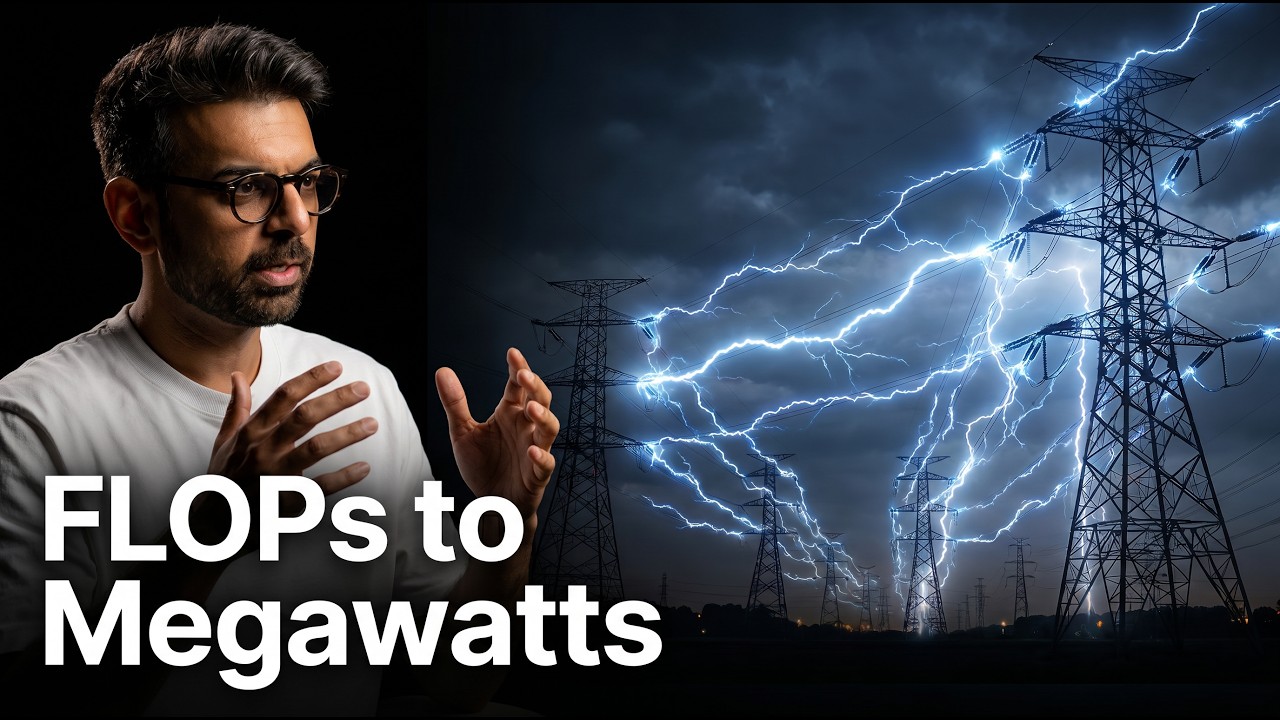
Anjney Midha 把 Amp 定位成 AI 算力的"独立系统运营商"(ISO)——参照美国电网 PJM Interconnection 的模型,做 pooling、调度,但自己不持有资产
Anjney Midha 把 Amp 定位成 AI 算力的"独立系统运营商"(ISO)——参照美国电网 PJM Interconnection 的模型,做 pooling、调度,但自己不持有资产。 他认为现在很多有钱有算力的 AI lab 仍出不了东西,根因不是技术,是 culture:mission alignment 在快速 scaling 中被稀释,半…
为什么这期值得听
算力浪费的根因
不是算法、不是预算,而是 alignment 与 culture
Amp 的"电网"模型
ISO(独立系统运营商)思路,pooling + 调度,不持有资产
Anthropic 为什么"起飞"
"luck favors a prepared mind"——4 年极致准备的复利
Culture 是花园不是护城河
来自 A16Z 厕所外那句 Bushido 名言
Net-positive 数据中心
$4 → $4.50/小时,把多出的钱给社区
一个被低估的赛道
End-of-life prediction,占美国医保 30%
开场诊断
"there are so many AI labs today that have all the cash they need.
They have all the compute they need and they're still not able to ship anything"
"my diagnosis it's the culture. If you stop taking the actions that demonstrate the mission alignment to what you've said to your team and to the world matters to you, then your culture starts to fray."
第一组数字:集群利用率的"行业标准"
Node 利用率(Google 标准)
Node 利用率(应该是的标杆)
MFU(best in class)
关键判断:大多数"single-down"集群都到不了这个数字。原因不是技术能力,而是资本方→集群部署方→产出衡量方之间的人链路太长,alignment 出问题。
Radian 比喻:起点偏一点,
规模化后就崩
作者的核心隐喻:两条线在原点偏几度,
到远端就拉开成完全不同的轨迹。
问题不是初始的"想做好"
消失了,团队最初都北极星明确
被要求快速 scale 而不是
iterative bring-up
于是"the wastage just
compounds really fast at scale"
半导体行业的常识,AI 不该绕开
"AI 例外论"
"AI scaling 是新的、所以可以抛弃 common sense"
盲目 scaling、不做 iterative bring-up、Zuck 时代
"move fast, break things"
Iterative bring-up
DSA / 半导体行业沉淀几十年的纪律
margin of error is lower, cost of wastage is higher
AI 反而应该 put a premium on common sense
"Move fast with responsible infrastructure"
Anjney 重写 Zuckerberg 的口号——从 "move fast, break things" → "move faster, stable infrastructure" → 现阶段应是 responsible infrastructure
反面教材:Neo-cloud 的营销话术
Neo-clouds = marketing speak
"this whole idea of neo clouds being somehow this new category is a lot of marketing speak"
判别"真功夫 vs 营销话术",Anjney 列了三道反问——以下都不是好信号:
- sponsoring happy hours at NeurIPS
- "legibly bitter-lesson built"
- hanging out at "situationally aware" parties
Amp 实际在合作的对象
"really good, reliable, trusted data center providers in America who've been around 20+ years"
对上面三道反问的回答全是 No,但——
- "They're adults. I trust them."
- "They can run land. They can run power."
- 经历过互联网 boom & bust 周期
Procurement 的判断标准从来不是"懂不懂 AI",是"能不能 run 一个稳定的 utility"。
Amp 不是 Neo-cloud
是 ISO(独立系统运营商)
类比来自美国东北部的电网 PJM Interconnection。
Pooling + 调度:拉来一堆数据中心 supply
长期 anchor 客户:互不重叠的 demand 形态
最关键:ISO 自己不持有资产——历史上最持久的电网都是这样
嘉宾原话:"Neo-clouds are suppliers... they are demand sort of off-takers of the grid. We see ourselves as what's called an independent system operator."
电网历史:steel factory + shoe mill
工厂自建发电
每家工厂"半台发电机在后院 running at half capacity"——浪费严重。
Pooling 起来
钢厂晚上 spike、鞋厂白天 spike——错峰 demand 拼成连续负载。
中立的协调者
独立的 ISO 协调发电、传输、工厂——这是 PJM Interconnection 的起点。
类比到 AI 算力:研究 lab 之间 demand 形态不同(pre-training spike 长、推理 baseline 稳),如果有个中立的 ISO 把 supply pool 起来,每家都能拿到 base load + 弹性 spike。
Amp 的具体数字
当前 supply
1.3 GW over 4 years
≈ "$40 billion of cloud spend"
("to be clear, we haven't secured all of it")
Steady state 设想
1.3 GW base load +
~6 GW spike capacity over 4 yrs
最近 6 周的现状
"we thought we'd have a bunch of
excess capacity by the end of this year.
It's all gone."
Interruptible demand:从 Google Borg 学到的调度
机制
- 团队拿"credits"竞价 GPU 时间
- 高优先级 job 可以抢占低优先级 job
- 大家 base load 保证、spike 走 dynamic priority
Amp 在做的
- Scheduling layer 起步(Sab + Mihai 在 Google 做过 Borg/GQM)
- 经济层做长期 ISO
- 走向 open protocol:any compute, any silicon
有趣的副作用:嘉宾原话"this is a thing that has been tried internally within Google and it led to Google missing GPT"——credit/拍卖式调度让团队竞争,central command(要 All-in 一件事)就难做。
Net-positive 数据中心:Scott Nolan 的 \$0.50 想法
当前 marginal 单价
上调后
多出的 $0.50
"I can tell you as a customer of that compute, I would love that. I'd be happy to pay an additional 50 cents per hour. ... if that means the public benefit is so clear to the communities that the data centers are coming up in, I'm going to feel like that compute is much more reliable."
为什么这个 \$0.50 想法很关键
数字:今年 ≈20% 的美国新数据中心
"up to 20% of all data centers this year in in the US, my understanding is are at risk."
风险:拿不到社区支持,建不起来。
(嘉宾自己也补充:这数字可能 overstated)
社区真正在意的不止是岗位
"they don't just care about jobs. They care about all the other stuff around it, right? Like they care about power grid, they care about environment, permitting and so on."
监管的暗影:"There will be audits. There will be investigations. And when the regulators come, I don't know when it's going to be. The folks who are moving fast and breaking things in the name of AI progress better be prepared."
第二条主线:DeepMind 的 embargo 困局
6-month embargo
"the paper is actually not even being published anymore cuz there's a six-month embargo inside of DeepMind ... if anybody on the business team says this could be interesting, it's embargoed for life."
逆向选择
"the stuff that gets published is the stuff that's not good enough. So there's an adverse selection problem."
NeurIPS 上的吐槽:"well, why would I look at the papers that are the trash of GDM?"
嘉宾的诊断:"research being hoarded ... there's negative externalities ... there's a market failure. And somebody needs to unlock that research."
这是 Amp 旗下 Foundry 资本业务想解决的问题之一——从 DeepMind 这类大组织里"长出来"的研究员独立出去,Amp 提供资金 + 算力 + 团队。
Foundry:Amp 的资本业务
结构(自比 Alphabet)
"we structured ourselves essentially very similarly to Google"
- Amp Holdings = Alphabet Holdings
- Infrastructure business = ISO grid
- Foundry = 孵化 + 投资新 frontier labs
公开的几笔
- 投了 Periodic Labs(这次录音地)
- "we put a few hundred million dollars into Anthropic from our fund earlier this year"
- 嘉宾长期帮 Anthropic、Mistral、Black Forest Labs、Arena 等团队
逻辑闭环:Foundry 投出的 lab → 在 Amp Grid 上拿 base load → 拉动 supply 端的长期合约 → 给 ISO 提供稳定流动性。这就是嘉宾说的"two-way protocol"。
一个"非典型"个人副线:End-of-life prediction
Medicare 占比
Stanford 病历数据集
嘉宾追了多少年
技术不是瓶颈——"once you get the data set, like RL works. Honestly, even regression models work."
真正的瓶颈是监管:医生不敢把 clinical liability 转嫁给 AI 系统。
文化对比:死亡观与医疗系统
印度 / 佛教视角
"death is one step in a journey of many lives"
嘉宾家乡 Chennai 的葬礼是"街上跳舞、有鼓点、家人庆祝"——逝者从这一世的责任中解脱,去下一段旅程。
美国 / 基督教视角
"frames death as this terminal point"
医疗系统就从 "必须延后死亡" 这个文化默认出发,所有 incentive 朝向 prolong。患者末期常常被困在医院里。
系统效应:医生因 medical malpractice 顾虑 → 不给清晰预后 → 患者"let's try it all" → 30% Medicare 烧在 end-of-life → 患者 quality of life 反而下降。
解药:AI 给出比人类更精确的预后区间,empower 患者自己决定怎么过最后这段。
Output-maxing:嘉宾的"统一场论"
"from an engineering perspective it's basically output maxing. ... the department of output maxing."
浪费什么都不行
"wasting GPUs, wasting human, and Medicare"——主持人替他总结。
所以"anti-waste"是这门学科的形容词。
学术化的版本
"if I was starting a new department at Stanford ... I'd probably call it the Department of Alignment."
不是 AI safety 那个 alignment——是 LP / 创始人 / 公众的 full-stack alignment。
标准化:Matrox 选 Nvidia
reference architecture
Reiner Pope(Matrox CEO)拜访嘉宾时的洞察:
新芯片公司 "can't fight on every front"
直接用 Nvidia 公开的 reference architecture——"the same footprint as an Nvidia rack"
把全部创新预算砸在 systems co-design 上(logic die),数据中心层抄作业
Jensen 已经做完了所有 hard work——开放标准让 Matrox 这种公司有空间存在
但独立芯片公司有个新瓶颈
Trust boundary:在 Google 内部时,
co-design 团队就坐在 Gemini / PaLM 团队旁边——
loop 极紧。
独立创业后,你处于 "outside the trust boundary"
Tape-out 要 2 年——等芯片做出来,模型架构早变了
Amp 的"foundry play":让独立芯片团队进 Amp 系的 lab trust 圈
研究员→CEO 这件事,VC 普遍看错
"venture capitalists suck at seeing human beings as dynamic agents. ... They want to put you in a box."
反例榜单
- Dario Amiodei — scientist → trillion-dollar 公司路上
- Anastasios Angelopoulos — LM Arena 上百万用户
- Robin Rombach — Stable Diffusion → Black Forest Labs
- Guillaume Lample — Llama → Mistral
嘉宾的判断
"Being a CEO, nominally speaking, is not that hard. Being a good CEO is hard. Being a great CEO actually requires a level of performance that scientists who have already published at the top of their field have accomplished."
"Athletes of the mind"
"To publish in academia over the last 20, 30 years, to make it to the top of your discipline at a place like Berkeley, you were a star athlete. Like you are an athlete of the mind. And you perform at the highest levels."
嘉宾的 default
"I would just fund researchers all day"——已经在领域里 put soda out 的 researcher,他们已经是 star athletes。
真正的失败模式
不是"researcher 不会管理"——而是他们不想当 CEO:"they primarily want to publish"。
这种就让他们安心 publish。
要当 great CEO 的代价:"willing to be confrontational up and down the stack"——对自己团队、对招聘、对客户、几乎对所有人。
Anthropic 起飞 ≠ 运气好
"Luck favors a prepared mind. ... Anthropic has been the most prepared company for 4 years. And so then when the right context data comes in, the right developers start sending in the right context diffs, sure, you could say you got lucky, but if you ask me, they're pretty damn prepared with paranoia for 4 years."
"起飞"时间点
"Anthropic basically achieved takeoff in October of last year. That training run..."
(社区内部知道的事,外界从 12 月 release 后才感受到。)
Burn 效率
"There's numbers on their burn compared to OpenAI ... they are so much more efficient. Not even close."
Anthropic 的 P0 是 coding,从 day one
"their P0 from day one was coding. The reason mechanism system there was: if we crack coding, then we will crack AGI. ... our mission is AGI. We want to get there safely. If we focus on coding, it's such a generally powerful capability that it can accelerate all kinds of work on a computer."
代价
对其他方向说 No——超长 list
选择标准
"the only thing when you have scarce resources you got to invest in"
结果
P0 锁死 → mission 定义一切 → 文化收紧
对照 Periodic Labs:"superconductivity is the mission. Coding is not the mission. So we use Claude. We'll use Claude. We don't care about that."
Culture:不是 set of beliefs,
是 set of actions
A16Z 内部那条嘉宾天天经过的厕所外标语:
"Culture is not a set of beliefs.
It's a set of actions."
(嘉宾说出处是 "Bushido is a Japanese philosopher" —— 实际 Bushido 是武士道的统称,不是个人名字,但嘉宾原话如此。)
Culture 是很脆的——需要每天 tend,像花园
最难的是早期:没有 hardship、没共渡难关,culture 就定义不锐
太多钱、太早、太快 ≠ 好事
现在的问题
"so much money going to these labs, there's no hardship. There's no 21 nos."
没人对你说不、没人逼你定义 P0、没人逼你定义 hill to die on——culture 没机会被淬炼。
Anthropic 的反例
"the number of people who said no, the number of people who said 'sorry, we're already investors in OpenAI'—that is competitive defense. It forces you to really understand like what is the hill you want to die on at the expense of everything else."
"21 nos" 是嘉宾用的口语——指 Anthropic 早期被很多 VC 拒掉。原话:"there's no 21 nos. And that in hindsight was a feature not a bug for Anthropic."
关于 "winning" 这个词
"This idea of winning is so weird to me. ... I think you want to lead. ... You want to push the frontier. You want to push the state of the art. You want to do something that hasn't been done before. You want to capture value. But you don't want to capture so much value that people think you're not aligned with your mission."
关于 Jensen vs Dwarkesh 那期:嘉宾观察到他俩其实在说同一件事但 mental model 错位——Jensen 是 "5-layer cake" 抽象、Dwarkesh 是 "pre/mid/post-training systems loop"。这就是嘉宾整集反复强调的:"so much of the problem in the world is reasoning by analogy ... and the assumptions that are held invisibly."
First principles 时代的小奖励
"this is actually the best time in human history for first principle thinkers because everything you think will happen is actually now coming true."
Heuristic vs Axiom
"it's very important to see the distinction between a heuristic and an axiom. An axiom can be proven from internal consistency. A heuristic is a shortcut."
VC 圈最大的毛病:把 heuristic 当 axiom 来评判公司。
Real-time action prediction
嘉宾跟一个陌生人对话被问"what do you think about real-time action prediction models?"——而不是问"world models"——立刻判断对方"done the work"。
精确表述 = 信号。
核心金句
"so many AI labs today that have all the cash they need ... and they're still not able to ship anything"
"AI scaling should be putting a premium on the value of common sense ... margin of error is so much lower and the cost of wastage are so much higher."
"They're adults. I trust them. They can run land. They can run power."
"Neo-clouds are suppliers ... we see ourselves as an independent system operator."
"Luck favors a prepared mind. ... Anthropic has been the most prepared company for 4 years."
"Culture is not a set of beliefs. It's a set of actions."
"there's no 21 nos. And that in hindsight was a feature not a bug for Anthropic."
"this is actually the best time in human history for first principle thinkers"
Output-max everything.
"venture capitalists suck at seeing human beings as dynamic agents."
— Anjney Midha · Amp · Latent Space @ Periodic Labs