Getting Humans Out · of the Way
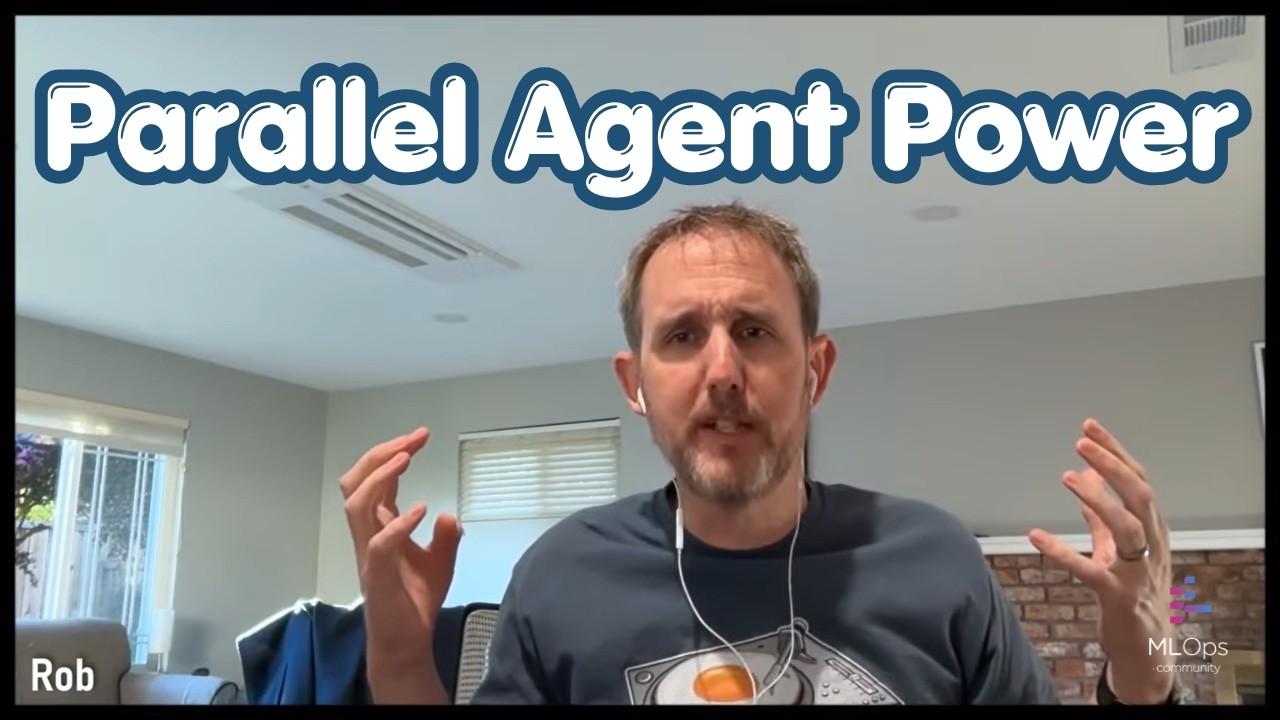
Rob 是开源多 agent IDE Brumi 的作者. 这期他把"如何把人从 loop 里拿出来"的整套手艺摊开讲——
Rob 是开源多 agent IDE Brumi 的作者. 这期他把"如何把人从 loop 里拿出来"的整套手艺摊开讲—— 从让 agent 截图自证 (feature walkthrough doc), 到自定义 lint 规则爆炸, 到 plan.md 替代 plan mode, 到并行 5 个 agent 挑赢家. 核心隐喻只有一句: 教 agent …
这期里的六条主线
Demetrios 主持: "I had never thought to ask that question." 这期是一个把 manager-of-agents 工作流吃透的人,
把每条小细节都说出来. 没有理论, 全是 day-to-day 怎么干.
工作的形状变了
每隔几周模型一升, 你就被往上推一格.
Autocomplete · tab 一下补一两行
Pair programmer · IDE 侧边栏, 一半要纠正
Terminal agent · 自己跑久一点, 像 line manager
Manager · 同时盯十几个, 它们做 QA / 文档 / 验证
Rob: "each level you can give them more autonomy and step back more and micromanage them less."
Rob 的核心隐喻: 管理 agent ≈ 管理人
教它怎么向上汇报: 哪些信息要给你, 该问哪几个关键问题, 怎么把工作呈递给你.
你的注意力是稀缺资源, 它的不是.
你可以浪费它的时间. 让它写大量样板文档、刷高 unit test 覆盖、不停 refactor、
开五个分身做同一个任务再扔掉四个——这些放到人类身上是 cruelty, 放到 agent 身上是 OK.
"You should teach your agents to manage up. So if you've got a human who works for you,
important skill of them reporting to you is they know what information to give you,
what questions to give you, and how to present their work to you."
第一招: feature walkthrough doc
agent 写完一个 feature 后, 必须自己交一份"导览文档".
一组 截图, 每张 cropped 到关键区域,
配文字说明"在做什么、为什么".
另一个 sub-agent 复核——这些截图真的展示了应该展示的东西吗?
人 扫一遍 doc 就行, 看完点 merge.
还附带一个 playwright spec, 下次能再跑.
"Build a screenshot based feature walkthrough showing this works.
If it doesn't work, keep it racing till it does."
同一份 doc 兜住了三件事
sub-agent 发现某张截图根本没展示 feature → 把任务退回去重做.
Rob: "I don't look at the code. So when I merged code, most of the time I do not actually try the app."
他扫 walkthrough doc, 看功能齐了就 merge.
发版本前, 把所有 walkthrough 的 playwright spec 全跑一遍.
像素差异让 agent 自己判断: 是预期变化还是 bug.
作者 gloss: 老式 QA 是人 click through app 找问题. 新式 QA 是 agent 给自己做记录、自己审、
最后递给你一份能扫 30 秒看完的 PDF.
Demetrios: "I've spent so much time QA-ing things... this now is becoming my go-to."
Get the human out of the loop
"The main role of a human when working with a team of agents is coming up with the validation processes.
If you can define what good means and you can work out ways of sculpting and defining that...
then a lot of the time the agents can then deal with that."
点 app 走流程
逐行审 diff
人肉做回归测试
"good" 长什么样?
拿什么测它?
agent 怎么能自证?
看到自己在 micromanage
→ 加一道
verification 流程
第二招: 自定义 lint 规则爆炸
agent 写出来的代码风格不对? 不要每次都纠正它——加一条 lint 规则, 以后再也看不见了.
关键是 agent 自己写 lint 规则又快又好.
人写 custom lint 规则是件痛苦的事, 但 agent 写起来很顺手. 这是一个非对称.
第三招: 文档惯例 (给 agent, 也给人)
- 这文件是干什么的?
- 大概怎么实现的?
- 关键设计决策是什么?
- 和哪些其他关键文件相关?
- 这文件夹哲学上是干嘛的?
- 里面的文件大体在做什么?
- 这块代码做了哪些设计决策?
- 每个文件一行 summary
"The way the agents navigate the code base is, broadly speaking, semantic search...
they will do a better job of that if the code is itself well documented."
Rob 强调: 这同时让人类也更容易上手——很多对 agent 友好的事, 对人也友好.
"你可以浪费 agent 的时间"
"With humans, refactoring is a lot of work and humans don't like doing work, and work is expensive,
so in practice you usually don't refactor it...
but the cool thing about agents, is you can waste their time."
作者 gloss: 这反过来还推翻了一种偏见——"agent 写的代码很 shitty".
Rob 的观点: agent 写的代码导得好的话, 经常比人写的还好——因为它愿意做那些人不愿意做的、
冗长的、严格的、文档化的工作.
第四招: 并行跑 5 个 agent
低技术含量, 但很有效.
描述同一个任务的 5 种角度, 在 Brumi 里几下键就开 5 个 session.
跑完看每个的 verification 结果和最终代码——
有的卡住, 有的产出风格不喜欢, 有的设计决策亮眼.
挑一个 merge, 其他丢掉.
"I would just like describe five different angles on the task, can say run with it,
and then at the end I look at their verification results and what they've done. Pick one."
Merging is a solved problem
并行跑出 shit ton of conflicts? Rob 说这件事 agent 处理得很好.
"Agents are great at doing a ton of work, so I feel like merging is just a solved problem now,
and that really changes the extent to which you can go in parallel."
关键解锁: 一旦 merge 不再痛苦, 真正能"广撒网"——每天扔几十个 feature 给 agent 同时干,
回头一个一个 merge, 完全可控.
Brumi 的核心 UX: 一键命令
左侧: 所有 session 列表 (每个 = 一个 worktree)
中间: agent 面板, 看它在干什么
右侧: 文件面板 (Monaco, 跟 VS Code 一致)
中间偏上: source control / 代码 review
"In a sense it feels like a minor feature 'cause you could literally just type these same things in...
but the fact it's a single click — huge."
跑 10-20 个 agent 的现实约束
Demetrios: "How are you actually running 10 or 15 agents in parallel? I have a hard time even running like three."
Rob 的第一答: "Step one, have a very, very beefy laptop."
Claude 的推理在云端跑——便宜.
本地跑的是: 单元测试、起本地 server、E2E.
10 个 agent 同时起 server → 本机起火.
- 跑过 lint + unit 之前, 不要跑 E2E
- 不要为了抓一行错误就把 E2E 跑十遍
- 未来计划: Brumi 支持 cloud container
不是微管理, 是溜达一圈看 broad pattern——
发现某个 agent 在反复跑 E2E, 就回去更新 skill / lint / guidance,
而不是逐个纠正.
第五招: plan.md 比 plan mode 更好用
"I actually don't generally use Claude's built-in plan mode.
I have it create a plan to MD file and ask me the core top level questions.
And if it does a good job of asking me the top initial questions, it usually won't have gone sideways."
3-5 个高层问题. Rob: "I often won't actually read the plan." 看的是问题, 答 yes/no/调整.
sibling worktree 可以读对方的 plan.md——
"look at this sibling worktree's plan and see what it's up to."
作者 gloss: 这是一种把 agent 注意力管理"反向" 给人的小技巧——
agent 自己不擅长压缩, 但擅长写出固定的 markdown.
人不擅长读长 markdown, 但擅长回答 "这个假设对吗?"
第六招: 让 agent 自己写工具
Rob 让 agent 写 UI 组件去匹配 Figma 设计. 默认行为: agent 反复看 PNG / MCP 渲染, 慢得要死.
"Looking in detail at the PNGs from the Figma and the MCP rendered versions...
trying to understand what they're different. It takes ages."
让 agent 写一个 diagnose 脚本——直接吐出
"这里和 Figma 差了什么, 怎么修". 后续所有 agent 都用它.
"Agents will do much better work if they've got the right tools, but you can have agents write those tools.
So part of the art of having a good codebase is also about having the right tools that make all the work really easy."
神级动作: "what was hard?"
"Ask the agent to tell you what was hard. He'll tell you."
"你这段时间在花时间做什么?
什么是 hard 的?"
有时是写个脚本 / tool
有时是 refactor
有时是 codebase 本身需要重塑
就像和 report 做 1-on-1: 你 enjoy 什么, 不 enjoy 什么.
然后用这些信息让生活变好.
Demetrios 的总结很到位: "That's like the new technical debt is what have you been spending your time on.
That's how you're getting rid of tech debt by finding what is hard for the agent."
那人这一边干嘛?
工作没有消失, 只是形状变了.
定义"good"长什么样 + 把它写成 agent 能跑的 verification.
给 agent 写工具 / skill (或让 agent 写, 你审).
Manage by walking around——抽样观察, 升级 guidance.
spot 哪些问题真的可解——这是最值钱的能力.
Rob: "I'm really kind of loathed to give strong pronouncements about what humans will do because by the time people watch our podcast, that might not be true anymore."
这期最哲学的一句: \$100 钞票
"No one leaves a hundred dollars bank note on the floor unless it's only just appeared there.
And so if a problem has been solvable for a long time, it's probably already got solved.
Things are interesting when a problem only just became solvable."
能解又没人解的问题 = 刚刚浮现的窗口.
最值得花精力的, 不是大家都在抢的, 是只刚刚变得可行的.
Demetrios 接的下一句也好: "The best skill that I can have is being able to articulate what I want."
Rob 同意: 知道哪些问题需要解, 是 remarkably difficult skill.
Rob 的 stack: Claude / Codex / Gemini
"Claude's my daily driver."
"I use Codex when I run out of Claude credits...
Codex isn't bad. It's a constant leapfrog race."
"I try Gemini every now and then to see has it got good yet
and I'm saying, no, it hasn't got good yet."
这就是 Brumi 的设计立场:
"I wouldn't wanna lock myself into a workflow that requires me to only use Claude...
it's good to be using a platform and setup which isn't built by one of the major providers."
Brumi 是开源的, works with all CLI agents.
总结: 这期的"操作系统升级"清单
☐ 写一个 feature walkthrough doc skill, 强制 agent 截图自证
☐ 看到不喜欢的代码风格, 让 agent 写 lint 规则固化
☐ 每个 file 头加文档注释, 每个 folder 加 README
☐ 改用 plan.md + 3-5 个问题替代 plan mode
☐ 试着同时跑 5 个 agent, 同任务不同角度, 挑赢家
☐ 看到 agent 在 hard 的事上耗时 → 写工具 / 脚本
☐ 每天问一次 agent: "what was hard?"
☐ 不要 lock 在单一 provider, Claude + Codex + 一个开源 IDE
核心金句
"You should teach your agents to manage up."
— 整集核心隐喻
"I don't look at the code. So when I merged code, most of the time I do not actually try the app."
— 凭 walkthrough doc 决策 merge
"The main role of a human when working with a team of agents is coming up with the validation processes."
— 人的新工作描述
"The cool thing about agents, is you can waste their time."
— 解锁 refactor / 并行的成本不对称
"Merging is just a solved problem now."
— 并行规模化的关键解锁
"Ask the agent to tell you what was hard. He'll tell you."
— 新型 tech debt 的入口
"No one leaves a hundred dollars bank note on the floor unless it's only just appeared there."
— "哪些问题值得现在解决"
"Things are interesting when a problem
only just became solvable."