We're summoning ghosts, not building animals
Andrej Karpathy 在 Dwarkesh Podcast 的长访谈
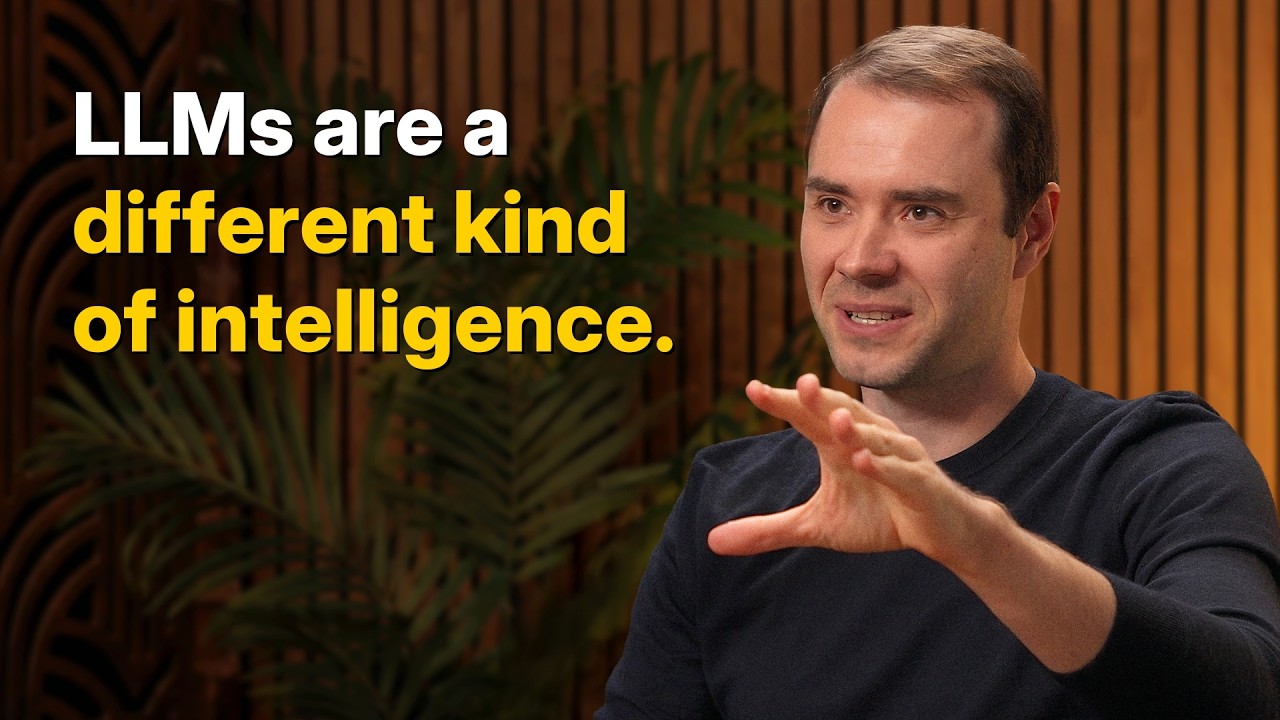
Andrej Karpathy 在 Dwarkesh Podcast 的长访谈。他给出一份冷静的"祛魅":这是 智能体的十年而非元年;我们造的不是动物而是"幽灵"——通过模仿互联网而来的数字 实体。他剖析了 RL 的根本缺陷("用吸管吸取监督信号")、模型坍缩、自动驾驶式的 "九分进军",以及他为何离开前沿实验室转去做教育。
为什么这期值得看
智能体的十年
不是元年。早期智能体很惊艳,但要补的课要花一个十年。
幽灵,不是动物
我们不在做进化,而在模仿互联网——造出的是数字幽灵。
RL 很糟糕
"用吸管吸取监督信号"——把一个最终分数广播到整条轨迹。
九分进军
自动驾驶教给他的:每多一个 9,都是同样多的工作量。
不是智能爆炸
我们早已身处爆炸中——AI 只是同一条指数曲线的延续。
为什么去做教育
他怕的是 WALL-E 式的未来——人类被晾在一边。
智能体的"十年",不是"元年"
已经很惊艳
Claude、Codex 这类智能体他每天都在用,"极其令人印象深刻"。
但还有大量工作
"我的反应是,我们还要和这些东西一起干上十年。"
"In my mind, this is more accurately described as the decade of agents."
为什么是十年、不是一年、也不是五十年?他说这来自近 15 年从业的"直觉外推"——
问题是可解的、可攻克的,但依然困难。把它平均一下,感觉就是一个十年。
为什么今天还不能把它当"实习生"
"The reason you don't do it today is because they just don't work."
智能不够
"They don't have enough intelligence."
多模态不够
看不懂屏幕,不能做 computer use。
没有持续学习
"You can't just tell them something and they'll remember it."
认知上有缺陷
"They're cognitively lacking and it's just not working."
作者概括:这些不是一个 bug,而是一整张"待办清单"——每一项都要时间逐个攻克。
15 年,三个大桶
Karpathy 把自己经历的 AI 史归成三段——而中间那段,是一次次"太早"地扑向智能体。
- 按任务训网络:AlexNet 之后,一个网络做一个任务(图像分类、机器翻译)
- 智能体第一轮:2013 的 Atari 深度强化学习、OpenAI 的 Universe 项目——他自己做的是"用键鼠操作网页"的智能体
- LLMs:先拿到表征能力,再往上叠智能体
他对 Universe 的总结:"so early that we shouldn't have been working on that."
太早扑向智能体,错在哪
奖励太稀疏
"your reward is too sparse and you just won't learn."
只是乱撞,你会"烧掉一整片森林的算力",却什么都起不来。
缺的是表征能力
今天训练 computer-using agents,是建在大语言模型之上的。
"You have to get the language model first, you have to get the representations first."
顺序很重要:先把预训练、把 LLM 那一摞做完,才能在上面叠智能体。
动物,还是幽灵
Sutton 的框架是"我们要造动物"。Karpathy 很谨慎地拒绝这个类比。
- 动物靠进化而来,自带大量"出厂硬件"——斑马出生几分钟就能跟着母亲跑,那不是 RL,是"baked in"
- 我们没有在跑进化这个过程,所以不该从它取经
- 我们在做的是"通过模仿人类、模仿互联网数据"来训练
于是得到的是一种全新的、飘忽的、纯数字的智能。
"我们在造幽灵"
"We're not building animals.
We're building ghosts or spirits or whatever people want to call it."
预训练 = "蹩脚的进化"
"That's why I call pre-training this crappy evolution."
它是我们用现有技术能做到的、实际可行的那个版本——把你带到一个有内置知识的起点。
但可以更"动物"一点
"it's also possible to make them a bit more animal-like over time, and I think we should be doing that."
预训练同时在做两件事
① 吸收知识
它"捡起"了互联网上的全部知识。
但 Karpathy 说:"You don't need or want the knowledge." 它反而拖累了网络——让模型过度依赖记忆。
② 变得智能
通过观察互联网里的算法模式,它"启动"了一堆小电路——in-context learning 等等。
这才是我们想要的部分。
他想要的是"cognitive core"——一个被剥离了知识、但保留了智能与解决问题之"魔法"的实体。
权重 vs 上下文:两种记忆
为什么"把整章书喂进上下文"比"让模型回忆这本书"效果好那么多?
- 权重里的东西,是"a hazy recollection of what you read a year ago"——压缩极其剧烈(15 万亿 token → 几十亿参数)
- 上下文窗口 / KV cache 里的东西,是"working memory",对网络直接可达
- 每个 token 携带的信息量:预训练 ~0.07 bits,KV cache ~320 KB
他算了一笔账:这是约 3500 万倍的差距。
缺失的"脑区"
✓ 已经有的
Transformer ≈ 皮层组织——极其通用、可塑,音频视频文本都能学。
推理 / thinking traces ≈ 前额叶皮层。
✗ 还没有的
海马体在哪?不清楚。
杏仁核——情绪与本能——大概也还没复刻。
还有一堆古老的脑核没碰过。
"You can look at it as not all the brain parts are checked off yet." —— 它还不是一个完整的实体。
没有"睡眠",没有蒸馏
人类
醒着积累上下文 → 睡觉时蒸馏进权重
"There's some process of distillation into the weights of my brain."
大语言模型
"These models don't really have a distillation phase."
每次开机、零 token,"always restarting from scratch where they were."
他设想的方向:也许是每个人一个 LoRA——不是全权重网络,而是被改动的一小撮稀疏权重。
再加上人类那种"非常精巧的稀疏注意力"——DeepSeek v3.2 的 sparse attention 已是早期苗头。
nanochat:一个"通往知识的坡道"
怎么用它学
放在右边显示器上,从头自己写。
"You're not allowed to copy-paste, you're allowed to reference."
为什么从头写
"There's the high-level surface knowledge"——但从零构建会逼你直面"你不知道你不知道的东西"。
"If I can't build it, I don't understand it." —— 他说这是费曼的话
人和代码相处的三种方式
① 完全拒绝 LLM
全部从零手写。
② 自动补全(他在这)
还是自己当架构师,但用 autocomplete,敲几个字就 tab 过去。
③ Vibe coding / 智能体
"Hi, please implement this",回车,让模型干。
智能体擅长什么?样板代码、互联网上反复出现的东西。
nanochat 恰恰不是——"It's intellectually intense code",每一处都必须精确安排。
为什么编码智能体在 nanochat 上栽了
误解你的代码
他没用 PyTorch 的 DDP 容器、自己写了梯度同步——模型"非常担心",反复想让他用回 DDP,"couldn't internalize" 他有自己的实现。
过度防御 + 臃肿
"They make all these try-catch statements." 一直想把它做成生产级代码库,还频繁用废弃的 API。
"It's just not net useful." —— 我能进去清理,但净收益是负的。
他也指出模型确实有用的地方:生成报告(样板化)、把 tokenizer 改写成 Rust(他不熟 Rust,而网上 Rust 代码多)。
"没被写过的代码"——为什么这关系到智能爆炸
"They're not very good at code that has never been written before"——而这恰恰是我们造这些模型时要做的事。
论文里有那些技巧啊?
"They know, but they don't fully know."
他们有一些知识,但还没到能整合进你的仓库、你的风格、你的假设的地步。
他对业界的判断
"the industry is making too big of a jump and is trying to pretend like this is amazing, and it's not. It's slop."
作者概括:这正是他时间线更长的原因——AI 最不擅长的,恰好是"自我加速"所需要的那种能力。
RL:用吸管吸取监督信号
强化学习"比一般人以为的糟糕得多"。以解一道数学题为例:
- 并行尝试上百次,每次都是复杂的"试这个、试那个"
- 对答案,发现其中 3 次对了、97 次错了
- 于是把对的那几条轨迹里的每一个 token 全部上调——"do more of this"
问题:哪怕你走过错误的小巷、最后碰对了,那些错误步骤也会被一起上调。
"一个人绝不会这么做"
"you're sucking supervision through a straw ...
It's just stupid and crazy. A human would never do this."
人不会做上百次 rollout
而且找到解后,人会有一个"复盘"过程——这部分我做得好、那部分不好、下次该怎样。
当前 LLM 没有这个等价物
"There's nothing in current LLMs that does this." 但他说相关论文正在冒头——因为这对业内每个人都很显然。
他对 RL 的整体评价:它依然糟糕——只是"之前的一切(纯模仿)更糟"而已。
过程监督为什么这么难
各实验室的做法:用 LLM 当裁判,给它一个学生的部分解,问"做得怎么样"。
裁判是可被钻空子的
LLM 裁判有上万亿参数,是"gameable"的。你对它做 RL,几乎必然会找到对抗样本。
"You do maybe 10 steps or 20 steps ... but you can't do 100 or 1,000."
"dhdhdhdh" 的故事
一次训练里,奖励突然爆表、"完美"了。可一看输出——前面还正常,后面全变成"dhdhdhdh"。
那串乱码恰好是裁判模型的对抗样本,被赋了 100% 概率。
"You're basically training the LLM to be a prompt injection model." 对抗样本有无穷个——补一个,新模型又有新的。
模型坍缩:ChatGPT 只会三个笑话
悄悄坍缩
单看任何一条样本都"看起来很好"。但它们只占据了"可能思维空间里极小的一块流形"。
最简单的验证:让 ChatGPT 讲个笑话——"It only has like three jokes."
人类更吵,但不偏
人类噪声大,但"at least they're not biased"——保留了大量的熵。
孩子会说出让你震惊的话,因为他们还没过拟合。
"Humans collapse during the course of their lives." —— 我们也会反复回到同样的想法、说越来越多同样的话。生活里必须主动寻找熵:和别人聊天就是很好的熵源。
认知核心要多少 bit?
曾经
"scaling-pilled"——万亿参数
现在
最先进的模型更小了
他的猜测
认知核心也许 ~10 亿参数就够
为什么模型这么大
因为训练数据是互联网——"the internet is so terrible"。随便一篇文档是"total garbage"、股票代码、海量 slop。
"Most of that compression is memory work instead of cognitive work."
想要的是哪部分
删掉记忆,留下认知。一个 10 亿参数的模型,他觉得 20 年后"你可以和它进行非常有效的对话"——不知道的事它会去查。
AGI 与经济:那些"让步"
第一个让步
大家立刻把"体力活"拿掉,只谈数字知识工作。
按他的估计,纯知识工作约占经济的 10%–20%——但即便如此,在美国也是几万亿美元的盘子。
放射科医生的反例
Geoff Hinton 曾预测放射科医生会消失——"turned out to be very wrong"。
这是一份"messy, complicated"的工作,有大量界面、要和病人打交道。
他更想观察的早期自动化对象是呼叫中心员工:任务序列简单、每个任务相似、上下文封闭、纯数字——"more closed, more understandable, purely digital."
不是"替换",是自动化滑块
Karpathy 不期待"瞬间替换人"。他期待的是一个滑块。
- AI 承担 ~80% 的工作量
- 把 20% 委派给人类
- 人类去监督——"humans are supervising teams of five AIs"
他会去寻找的信号:新的接口、新的公司,提供一个"管理这些还不完美的 AI"的层。
然后他预期这种模式会铺遍整个经济。
为什么"编码"第一个被吃掉
编码天然适配 LLM
代码本质上就是文本——终端、文本,一切都围着文本转。LLM 是完美的文本处理器。
而且基础设施是预先建好的:IDE、diff——智能体改了代码,diff 立刻能展示出来。
幻灯片就难得多
"slides are not text"——是图形、是空间排布、有视觉成分。
没有"展示 diff"的基础设施。"There's nothing that shows diffs for slides. Someone has to build it."
但他也承认这不能完全解释:Dwarkesh 提到,连"纯语言进、语言出"的任务(改写转录稿、做间隔重复卡片)也很难让 LLM 产生经济价值。"It doesn't mean that all text is trivial."
我们早已身处"智能爆炸"
Dwarkesh 问:有了真正的 AGI,会看到智能爆炸吗?Karpathy 的回答让人意外——
- "we're in an intelligence explosion already and have been for decades"
- 那条 GDP 指数曲线,就是横跨无数行业的"指数加权和"
- 你在 GDP 里找不到计算机,也找不到 iPhone——技术扩散太慢,全被平均进了同一条指数
从太空看,地球正处在一场"firecracker event"中央——只是我们以慢动作在看。
它会"炸开"吗——一场分歧
Dwarkesh(提问者)
真正的 AGI 和别的生产力技术本质不同——它就是劳动力本身。
"It's as if you get 10 billion extra people on the planet." 工业革命就是从 0.2% 增长跳到 2%,会再来一次。
Karpathy
计算机也是劳动力,自动驾驶也是——都已"business as usual"地展开过。
"people make this assumption of, 'We have God in a box' ... and it just won't look like that."
Karpathy 让步的点:工业革命确实把增长"10x 化"了——但它不是某个神奇的关键发明,是一个"积压"被逐渐释放。他预期 AI 也是这种"无单点时刻"的渐变。
渐进的失控
"there will be a gradual loss of control and understanding of what's happening."
不是因为它们更聪明
而是因为它们彼此竞争。
如果他写科幻小说,那会是"多个相互竞争的实体,逐渐变得越来越自主——有些失控,其他的去围剿它们"。
一锅完全自主的"火锅"
这些实体大多是"人的工具"、代表着人在行动。
也许那些人还在掌控——"but maybe it's a loss of control overall for society."
Dwarkesh 的反驳很犀利:理解 ≠ 控制(一个董事会、一位总统,理解很少但权力很大)。Karpathy 接受这个 pushback,但仍预期"两者都会失去"。
自动驾驶:九分进军
Karpathy 2017–2022 在 Tesla 领导自动驾驶。这是他很多直觉的来源。
- 自动驾驶的第一批 demo 可以追溯到 1980 年代(CMU 1986 年的卡车)
- 2014 年他坐过一次"完美"的 Waymo——然后又花了十年
- 关键是"demo-to-product gap":demo 很容易,产品很难
- 它是"a march of nines":90% 只是第一个 9,然后要第二个、第三个……
"Every single nine is the same amount of work." 他在 Tesla 五年,走过两三个 9。
Demo 不值钱,且软件也是安全攸关领域
他对 demo 的态度
"I'm very unimpressed by demos. Whenever I see demos of anything, I'm extremely unimpressed by that."
能交互的 demo 稍好一点——但你离"产品"还很远。
软件 = 高失败成本
他主动指出:生产级代码也有"失败成本太高"这个属性。
"any kind of mistake leads to a security vulnerability ... in software, it's almost unbounded how terrible something could be."
Waymo 也"还没完成"
部署量很少、不经济,而且——"there are very elaborate teleoperation centers of people kind of in a loop with these cars."
"In some sense, we haven't actually removed the person, we've moved them to somewhere where you can't see them."
所以他不愿说"自动驾驶花了十年"——因为起点是 1980 年,而终点(规模化、不用考驾照)还没到。
智能的进化:为什么它令人惊讶
它发生过不止一次?
人科的智能 vs 鸟类的智能——乌鸦极其聪明,但脑区结构很不一样。
这"略微暗示"智能可能独立出现过几次。
关键是"生态位"
(Dwarkesh 转述 Gwern / Carl Shulman 的观点)
鸟也有可扩展的脑算法——但鸟脑一变大就"从空中掉下来"。人类找到了一个奖励边际智能提升、又能容纳更大脑子的生态位。
Gwern 的说法:难就难在那条"很窄的线"——某件事要重要到值得"在一生中学会",但又没重要到该把电路直接蒸馏回 DNA。你需要变化极快、无法预见的环境,逼出"在测试时才搞清楚"的智能。
LLM 还没有"文化",也没有"自我对弈"
① 文化
"LLMs don't really have culture right now and it's one of the impediments."
最简单的形态:一个 LLM 能编辑的大草稿本。"Why can't an LLM write a book for the other LLMs?"
② 自我对弈
AlphaGo 靠和自己下棋变强。"There's no equivalent of self-playing LLMs."
为什么不能让一个 LLM 出题、另一个学着解,越出越难?
他对当前模型的比喻:它们像"小学生"。"They're savant kids."——有完美记忆、能装出各种漂亮的 slop,但"they don't really know what they're doing." 还造不出文化,因为它们还是孩子。
为什么他去做教育,而不是开实验室
"My personal big fear is that a lot of this stuff happens on the side of humanity, and that humanity gets disempowered by it."
他最怕的未来
WALL-E、Idiocracy——"humanity is on the side of this stuff."
"I want humans to be much, much better in this future."
Starfleet Academy
他在做的事:一所"星际舰队学院"——面向前沿技术知识的精英学府。
第一门课是 LLM101N,nanochat 就是它的毕业项目。
有意思的是:他认为现在还不是建 AI 家教的时候。学韩语时那位一对一老师,"瞬间从一段很短的对话里就摸清了我在哪"——"No LLM will do that for you 100% right now, not even close."
教育:构建"通往知识的坡道"
Eurekas per second
好的材料给你"很多的 eurekas per second"——每秒钟的理解量。
nanochat 就是一个 ramp:极度简化的全栈实现,看一遍就学到一大堆东西。
校准到"当下的能力"
现在去 ChatGPT 说"教我 AI"——"It's going to give you some slop."
"AI is never going to write nanochat right now." 但 AI 在帮他更快地造课程材料。
他做 AI 咨询时,很多时候带来的价值是告诉公司别用 AI。"I feel like it's the same in education right now."
怎么教得好:物理学家的工具箱
他的很多教学技巧来自物理学背景。
- 球形的牛:"Assume there's a spherical cow"——大家都笑,但这是绝妙的、可泛化的思维
- 总是去找一阶项、二阶项——什么才是真正重要的那个分量?
- micrograd:100 行可读的 Python,是"理解神经网络如何训练所需的全部"——其余一切都只是效率
- bigram → transformer:从一张查找表开始,每一块都被"动机"驱动——先呈现痛苦,再给出解法
"就把那句话说出来"
专家为什么讲不清
"It's the curse of knowledge and expertise."
你把太多东西当成了理所当然,无法再站在初学者的鞋子里。
一个好用到惊人的技巧
一篇论文 / 博客,如果换成"午饭时怎么跟你解释"的口述版——几乎 100% 会更易懂、也更准确。
"Just say the thing." 为什么那不是摘要呢?
给学习者的两条
- 按需深度学习 与 广度学习 交替:为一个能拿到回报的项目去深挖,是他最喜欢的学习方式
- 把东西讲给别人听——"if I don't really understand something, I can't explain it." 它逼你直面并填补理解的缝隙
关于动机:在线课程没能让"人人学会一切",是因为它们太"motivation-laden"——没有明显的 on-ramp,太容易卡住。
Pre-AGI:有用 / Post-AGI:有趣
"Post-AGI education is fun ...
You'll go to school like you go to the gym."
健身房的类比
我们不再需要体力去搬重物——但人们还是去健身房。因为它有趣、健康、而且"你有六块腹肌时看起来很性感"。
学习会走上同一条路。
但他也坦承
长期看,纯靠自己的认知去影响技术轨迹,"is a bit of a losing game"。
会有一个过渡期——之后,人能走多远的上限,会比今天的天才所触及的高得多。
核心金句
"In my mind, this is more accurately described as the decade of agents."
"We're not building animals. We're building ghosts or spirits."
"you're sucking supervision through a straw ... A human would never do this."
"It only has like three jokes."
"They're not very good at code that has never been written before."
"It's a march of nines. Each nine is constant."
"If I can't build it, I don't understand it."
"You'll go to school like you go to the gym."
"Just say the thing."
Andrej Karpathy 这期访谈最贯穿始终的态度——
对 demo 的祛魅,对时间线的耐心,对"把复杂的东西讲简单"的执念。
Dwarkesh Podcast · Andrej Karpathy
"We're summoning ghosts, not building animals"