The $15B Physical AI Company
Applied Intuition 给汽车 / 卡车 / 矿车 / 农机 / 防务平台卖"让物理机器变聪明"的技术栈,
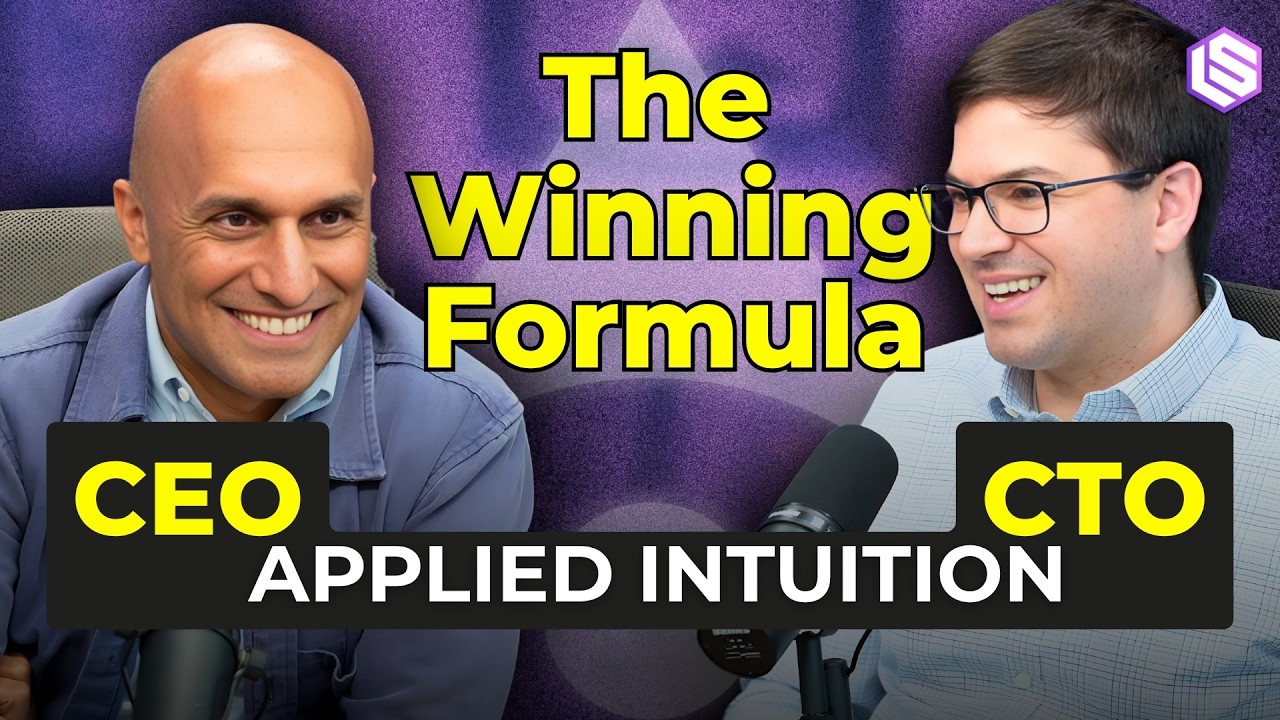
Applied Intuition 给汽车 / 卡车 / 矿车 / 农机 / 防务平台卖"让物理机器变聪明"的技术栈, 18/20 OEM 是它客户, 估值 $15B, 1000 名工程师, 现在在日本跑 L4 无人卡车. 这期把它的三个 bucket (仿真 + 操作系统 + 自动驾驶模型) 全部摊开讲, 还顺手把 "vehicles like pre-A…
这期里的几条主线
Applied Intuition · 数字一瞥
估值
工程师
工程师占比
产品数
Ex-founders
OEM 客户
覆盖 cars · trucks · construction · mining · agriculture · defense, 用 Peter 的话: "land, air, and sea".
Physical AI vs. Screen AI
Screen AI
- 一切都装进屏幕里
- LLM, code complete, 聊天机器人
- 出错最多换一个回答
"a lot of the focus, rightfully so in the last, three years has been on large language models, and so everything fits in a screen."
Physical AI
- 把 intelligence 放进会动的机器
- L4 truck 在日本路上跑, "as we speak"
- 出错 = catastrophic
"We can't have errors. Those are L4 trucks."
Qasar 把 "safety critical" 拎成中心词: 这两个字改写技术选型, 改写工程实践, 改写公司能不能活下去.
LLM 错答可以重 prompt, 一辆 80 吨的卡车不能.
三个 bucket
Peter: "our own technology stack has completely changed, I would say, roughly every two years." 已经历过 4 次重写.
Bucket ① · Simulation 是怎么开始的
起家做的事
仿真器 + 仿真基础设施.
"if you're trying to build a very complex software system that involves moving machines, you need to test that, and the best way to test it is it's a combination of virtual developments, a simulation, and then also obviously real world testing."
关键不在仿真本身
而在仿真器和真车的 correlation.
"a very careful process of that correlation between the simulation results and the real world results and ensuring that the simulator is in fact accurate to that."
RL 是 sim 的最大用户. Peter: "a lot of the best advancements happening in a lot of these AI systems right now in some way relate to reinforcement learning, and with now we have lots of compute, and you can do tons of interesting things for reinforcement learning."
作者概括: 仿真不是"造一个虚拟世界给车跑", 而是"先造一个虚拟世界, 再花更多力气把它和真世界对齐, 再用 RL 在里面训出真车能用的策略".
一个机器人会过热的故事
问题
人形机器人做杂技 demo 很惊艳, 十分钟之后就过热. 实际不能持续工作.
Peter: "these systems actually overheat" — 谈到 humanoid 时承认这是行业通病.
仿真里的解法
把 actuator 温度做成仿真参数, 让 RL policy 在训练时就知道"自己越动越热".
"the robot can actually adjust its motions in the simulation to account for the fact that, oh, it knows that as it's moving, it's actually beginning to overheat this motor."
没建模的参数 = RL 看不见的悬崖. 如果训练时温度不在仿真里, "your RL policy might It will disregard that. And now you run that on the robot and the robot will overheat and fail."
Alessio 反过来追问: "How do you have all of these parameters taken care of while also understanding the deployment environment?
Like temperature is like a great example, right? Why did you make my robot worse when it runs in like a freezer?"
冰柜里的机器人不需要怕过热——这就是仿真设计真正难的点.
Meniscus line — 仿真不是免费的
仿真便宜的区段
你能用便宜的仿真覆盖大部分 case, 拿到很好的训练 / eval 信号.
meniscus line
Qasar 给了一个意象——液面贴杯沿那条弯曲的线. 越过这条线, 仿真要做到那么真就比直接上真车还贵.
真车区段
"There's not, there's not this magical land where you're not gonna do that." 真世界测试不可能省.
Qasar 还给了一个嵌套: 软件 95% 走 CI/CD, 4% 在硬件 rig 上, 1% 真车. 物理 AI 也是这种金字塔, 只是现在世界模型把上面那 95% 拓宽了.
Neural simulation = Gaussian splatting + diffusion + 性能
为什么需要它
端到端模型直接吃传感器数据出控制信号. 想给它做 RL, 你必须把传感器数据本身仿真出来.
"to do reinforcement learning on an end-to-end model, you now need to actually simulate all the sensor data."
它长什么样
"think of it like a hybrid of Gaussian, splatting and diffusion methods, and where you really care about performance."
仿真不再只靠数学公式扩展, 还能靠真实数据扩展——这是世界模型给机器人开的新口子.
性能压倒一切. Peter: "Like performance is everything. If you can't do enough simulation fast enough and cheap enough, you actually can't get results that are worthwhile."
作者概括: 神经仿真把 "我能仿真什么 = 我有什么公式" 变成 "我能仿真什么 = 我有什么数据 + 什么算力". 仿真和模型训练本质合一.
Bucket ② · 车里的 OS, 像 2007 年的手机
车厂的 OS 是 50 个互不相通的 firmware. Peter 在 Google 时正好做过 Android, 看到的现状:
"physical machines today are more akin to the state of the phone market before Android and iOS existed."
"they bought all of these phones from the industry, and it turned out they had like 50 different operating systems on these phones."
要让现代 AI 跑在车上, 第一步是 把碎片化整合掉, 这正是 Android 当年做的事.
OS 不只是 HMI
很多人一听 "vehicle OS" 想到的是中控屏 (HMI). Peter 解释这只是最浅那层.
浅层 (HMI)
触屏、按钮、语音的人机界面. 重要, 但只是 thin top layer.
深层 (real-time control)
- 电机 / 引擎 / 转向 actuator 的 real-time control
- 多重冗余 (redundancies)
- 实时传感器流式数据
- 内存管理 / 网络 / 消息总线
Peter: "Imagine you try to run Microsoft Windows like streaming your sensor data in or controlling the vehicle. Like, the latencies are gonna be absurd. Like, you can never do that."
还得防宇宙射线. "What if there's a cosmic ray that flips a bit in the middle of the processor that causes some malfunction?" — 必须有 fail-safe.
不要把车 brick 掉 · 可靠 OTA
行业现状
大部分车厂几乎不更新, 即便更新也只更 HMI 一个模块. 想更 CPU 关键模块, "you have to go into the dealer".
Tesla 例外, 大约一个月更新一次.
Applied 的解
Vehicle 任意模块都能可靠 OTA. 这不容易做——
"there's lots of technical, technically deep stuff, in the tech stack to do that in a way that you're not going to accidentally brick a vehicle."
Peter 说这件事: "honestly, like across the industry maybe one of the most just pure impactful things that we've done is we've just, we're, we're now enabling the industry to actually do software updates."
Better-together stack: 你想买哪一段都行
只买 OS
license OS, 自己写 autonomy. 有完整文档, 不绑.
只买 dev tools
Sensor Studio 之类, 让你自己搭技术栈.
整套 license
OS + autonomy + 工具一起, "better together".
Peter: "we are a technology company, and so we license our technology to customers to use how they want."
OS 高度可复用. "highly reusable. So the fundamental technology is quite universal" — 但因为安全关键系统的芯片更杂 (不止 X86), Applied 的 OS 必须支持多种芯片架构, 这是和 LLM 世界 "默认 CUDA" 的最大区别.
类比 Android: Qasar — "Android has a huge suite of testing and it's a reliable operating system that runs on thousands of devices. And we think we can, we can do the same in all these physical moving machines, with the difference that we're really in a safety critical realm."
Bucket ③ · Autonomy AI 的两端
自动驾驶模型
端到端 (传感器 → 控制信号), 跨 cars / trucks / mining / construction / agriculture / defense, 还包括 land · air · sea.
人机协作 (HMI)
- 语音控制机器
- 机器知道驾驶舱里谁在、状态如何
- agent 替农民同时看好几台机器, 关键时刻才打断他
Qasar: "this concept of teaming man and machine is important. When you think about running agents or just running, different instances of, Claude and doing work for you in the background, you can take that analogy out, almost copy and paste and put it into, like, a farm".
SAE 等级. Qasar: "typically defined in SAE levels as an L2++ system with a human in the loop." — 自动驾驶里这就是司机随时可以接管的"高级辅助驾驶".
Onboard vs offboard — 一切由 latency 决定
Off-board: 数据中心 / 大 GPU. "I don't care if it takes one second for it to give me a result or 10 seconds." 模型可以巨大, 分布式跑.
On-board (embedded): "literally every fraction of a millisecond counts." 不能让模型卡住车.
桥: distillation. on-board 模型本质是 off-board 大模型的"派生小模型".
Swyx 问能不能直接 call home. Peter: "It's all about latency." — 美国还有一堆没信号的地方, 物理 AI 必须本地化.
算力, 不是模型, 才是物理 AI 的瓶颈
"in physical AI world, we're not really constrained right now by, like, the intelligence of the models. It's actually... deploying them in"
Foundation model 公司
瓶颈 = 资本 + 研究员
Physical AI 公司
瓶颈 = 能塞进车的硬件, 还要满足 power / cost / shock / 抖动 / 温度等约束
Qasar: "Those constraints force creativity." — 反过来这件事被他视为 Applied 的护城河, 不是负担.
顺便: Tesla R&D 车今天还装 lidar. 在 R&D 阶段用 lidar 给每像素配深度, 训练模型, 然后量产车把 lidar 拿掉, "now you can actually get depth with just the camera." Lidar 在 Applied 看就是 R&D 工具, 不是宗教问题.
世界模型 · 不需要"理解" 也能做对
讨论 hydroplaning (打滑) 时, Alessio 担心世界模型学错——比如以为太阳绕地球转.
Peter 给了一个反向的安心答案: 世界模型未必能"懂物理", 但视觉线索 → 减速这条因果, 它能学.
路面变平 + 水积起来 + 别的车在减速 → 模型自然学到 "我也得减速".
Peter: "the beauty of, these kinds of models where they just, they learn these non-obvious things."
但别指望世界模型一招通杀
工程现实
"if you're hoping to do real world deploys and you're purely relying on a world model approach, you probably won't get to something that works, before you go bankrupt."
— Peter, 直接给了一个 "engineering 层面的实话".
世界模型擅长什么
理解 cause-effect: 拿一勺土从 A 搬到 B, 它要知道 A 没了 B 多了, 而且这个变化会影响下一步.
对挖掘机、矿车这种"动作改变环境"的 task 尤其关键.
Applied 的策略明确: "diversified bet strategy" — 一个 approach 不够, 多条路一起押, 因为不同地理 / 行业的风险特征不一样.
作者概括: 世界模型 + 端到端模型 + 经典模块化方法, Applied 全部留着, 谁赢就用谁——这是有 1000 个工程师才付得起的研发奢侈.
AI Coding 在 Applied 内部 · Cursor → Claude Code
工具变迁
"Cursor was, I think the hottest tool in the company for a good while. Now Claude Code, I think has taken the reign on that."
还有一块内部 leaderboard, 鼓励工程师用 AI 工具.
反过来反哺产品设计
他们把 "AI 让屏幕里的 app 越做越简单" 这种思维拿来反问自己: 物理机器要做点事, 能不能也做到这么简单?
"taking now a lot of the same ideas and applying that to, 'Okay, well, if you wanted a physical machine to do something, how easy can we make that, using our own tooling and platform as well?'"
Sensor Studio 的转型. 以前是个 CAD 风格的 GUI 工具, 现在底层 API 全开, "using AI agents, you can actually configure a sensor suite with just text and likely reach a better result than you could've through the GUI in the past." — 整个产品组合都在按 AI agents 的胃口重写.
工程师的 bimodal distribution
投入了的人
"this subset of people that they really get it... they've clearly invested the hours needed to learn these tools and how to be effective."
没投入的人
"the productivity gap is just enormous." 之间差距已经大到 Applied 在面试上明确优先选投入了的人.
Qasar 自己改了观点. 3 年前他写过: 嵌入式 / OS / 数据库工程师不该做 AI engineer. Peter 当场拆: "the classic bitter lesson, topic, which is the Six months ago I would've said the same thing, but it's, it's becoming super useful for every domain."
具体例子: 半年前用 Claude 写 GPU shader 结果"underwhelming", 现在 "you're a little bit blown away, like, 'Wow, that actually worked. That's amazing.'"
Peter 立刻补一句: "the human validation is 100% key" — 命交给 AI 写的代码, 必须人 carefully checked.
验证从 binary → 统计 · Cruise 的教训
老世界
Euro NCAP 这种测例集: 车撞不撞模拟过马路的小孩? 二元答案, 过 / 不过.
新世界
"everything is statistics" — 你证明的不是过/不过, 而是多少个九的可靠性, MTBF (meantime between failures) 多长.
Cruise 的教训不是技术单一失败
Qasar: "the Cruise example wasn't a technology failure" — Peter 当场更正: "It definitely was a technology failure, but it was made much worse by the" 后续 PR / 监管沟通方式 (把人压在车下后又把车开走).
"There is a version where Cruise still exists." — 同样的事故, 不同的对外沟通, 公司可能没死.
Qasar 的硬数据观: "humans are way worse drivers statistically. Like, there's no, there's no debate." 但 "we're emotional animals" — 单一极端事件的情绪反应总会盖过统计.
Productionization · 我能写出他们接下来 20 个坑
"we can look at any company in this space and like, get a demo, and like, I can, I can write down a list of I know exactly the next 20 problems they're gonna hit. And like, and I can guess also what they're going to try to solve each of those, and I can guess which one's gonna actually work."
Research
新 idea / 论文 / 原型
Advanced engineering
为量产改造的子系统. Qasar 说 Applied 大部分时间在这一格.
Production
真车上路 + 后续维护
具体案例: 中国正在搞人形机器人马拉松, 26 英里 — Peter 用这个例子说明可靠性是行业最大瓶颈, 政府用 prize policy 推进 (类比当年的 DARPA Grand Challenge, "It really worked. It took the whole industry").
Qasar 自嘲: "We've just seen this stuff now. We've seen enough of this stuff. We lived enough of this stuff." — 不是天才, 是十年里把每个坑都摔过了.
复利技术 · 长长的一段平地, 然后跃起
Qasar 把 Applied 定位为 "compounding technology" 公司:
"this is truly compounding technology. A lot of the work that we do just compounds. we don't throw it away."
OS 在变好, dev tooling 在变好, models 在变好——三件事同时复利.
"the human brain just doesn't emotionally understand the compounding effects" — 大部分人会低估它能滚到多大.
Waymo 是现成的对比: "very interesting for a long time, but not worth one hundred and twenty-six billion dollars" — 同一家公司在曲线两端.
给创业者的话: 小问题域 + 第一性原理
商业上加一道 constraint
技术问题已经够难了, 创业者还得自己给自己加一条商业 constraint, 把范围卡小.
"think a little bit about the equation of how you use money and where you use the limited resources and limited engineers that you have."
不要抄成熟公司的策略
"founders falsely kind of take very mature companies' strategies and then apply to their, like, nascent."
1978 / 1982 的 Apple 跟 2007 的 Apple 不是同一家公司, 早期 Apple 就是组装电子件——别拿 Steve Jobs 2007 的 vertical 教条套自己 garage 的产品.
"find a small problem space" — 老 YC 教条, 在硬科技里 Qasar 仍然完全同意. 太宽 = 太多问题, 全部都做得 mediocre.
唯一靠得住的方法: "use first principle thinking" — 基于自己 / co-founder / 早期成员的技能 + 从客户听到的, 找一个 product space.
⚠ 不要直接照抄 Jensen / Zuck — "in different time and space". 也不要照抄其它早期创业者, "most of them are gonna fail."
招人: 硬件软件交界 + General Motors Institute
Qasar 自己是 General Motors Institute 毕业的——一所 100 年前 GM 自己开的工科大学, "not enough engineers in Michigan", 自己造一批.
"engineers' engineers" — 真懂底层系统, 不只是表面会用.
Peter: 找那些 真正欣赏 hardware / software boundary 的人. "in the vibe coding era, there are a crop of engineers that they don't think about hardware at all. And we don't have that luxury."
价值观: extreme curiosity. "what is light? What is a radio wave?"——一直往下问.
Peter: "if you get curious enough about software, you ultimately end up in hardware."
Plan mode + Next-token prediction · 普适性
Plan mode 也能搬到物理 AI
Alessio 问: 物理自动驾驶有没有 "plan 一步、再行动" 的概念?
Peter: "just like you can use, Claude code to plan out some complex coding task and you get some almost specification written out, those similar approaches absolutely can be applied to physical systems."
defense / mining 上尤其有用——一个目标可能要走 100 步.
Next-token prediction 普适
Alessio: 开车感觉就是 next token prediction, 你在路上, 之前做过什么不太重要.
Qasar: "It's all planning."
Peter 给了更宽的命题:
"everything in the world can actually be boiled down to, like, a next token prediction problem."
矿场挖一勺, state space 就变了, 模型下一步预测自然不同——一切都套得进这个框架.
Peter: "The remarkable thing about these techniques is just how universally applicable they are." — 同一个方法既能驱动 IDE 里的 agent, 也能开 80 吨卡车.
核心金句
"We can't have errors. Those are L4 trucks."
"physical machines today are more akin to the state of the phone market before Android and iOS existed."
"in physical AI world, we're not really constrained right now by, like, the intelligence of the models."
"It doesn't need to know about hydroplaning to know that it needs to drive slower."
"I can write down a list of I know exactly the next 20 problems they're gonna hit."
"the human brain just doesn't emotionally understand the compounding effects."
"if you get curious enough about software, you ultimately end up in hardware."
Constraints force creativity.
— Qasar Younis, Applied Intuition (Latent Space, 2026)