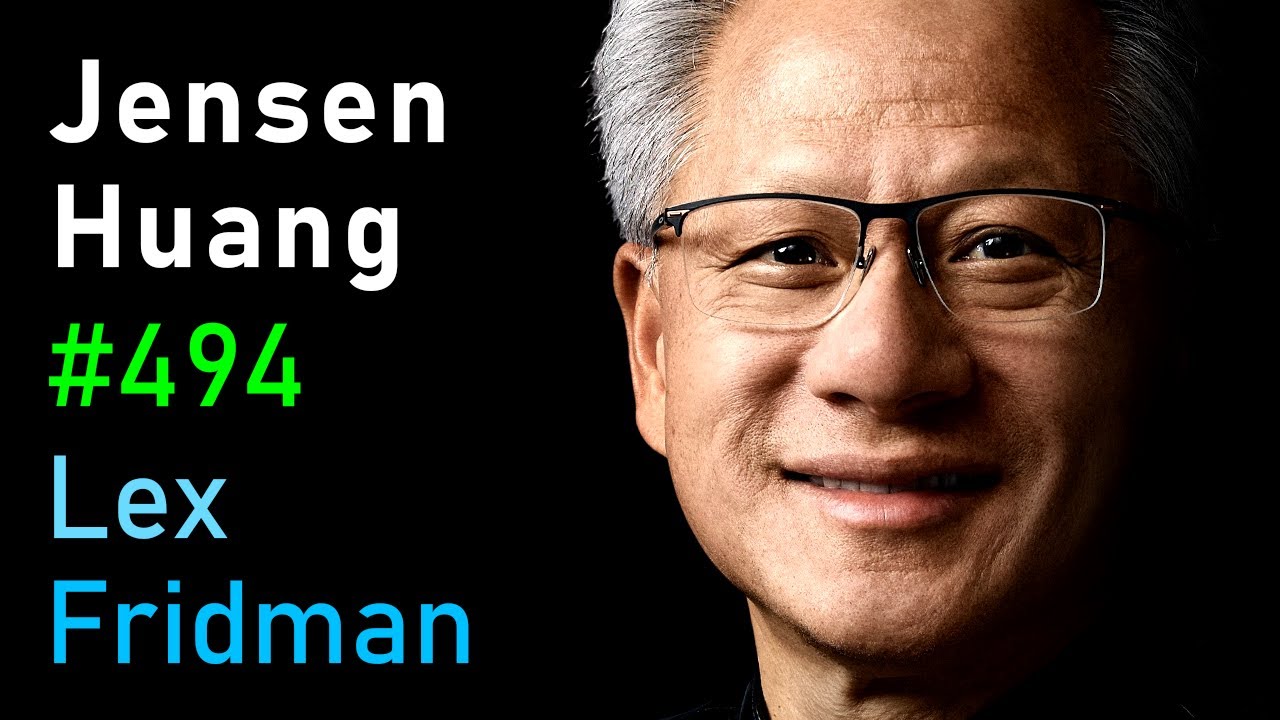
Jensen Huang
NVIDIA · The $4 Trillion Company & the Future of AI
Jensen Huang 把 NVIDIA 的打法讲成一条推理链:从 extreme co-design 到四条 scaling law,从 CUDA 在 GeForce 上的存在主义赌博到 agentic 时代的 "iPhone of tokens"。他也谈到 TSMC、中国、 供应链、能源瓶颈,以及"intelligence is a commodity…
为什么这期特别
Extreme co-design · 它指什么
Jensen 的定义:不止是芯片,而是整条栈的同时优化。
问题已经装不进一台机器 —— 你要让 10,000 台机器跑出一百万倍的速度
算法要切分、pipeline 要 shard、data 要 shard、model 要 shard
CPU / GPU / switch / NVLink / 光互联 / 铜缆 / 供电 / 散热 —— 每层都是瓶颈
"every technology to bear otherwise we scale up linearly"
为什么不得不 co-design
Jensen 直接把这个问题叫 "Amdahl's law problem"。
如果 compute 只占总 workload 的 50%,哪怕把 compute 加速到无限快,总加速也只有 2 倍。
所以 NVIDIA 不能只把 GPU 造得更快 —— 必须同时攻:
60 个直接汇报,不做 one-on-one
Jensen 说他直接汇报的人大约有 60 位,几乎都是工程背景的专家。
"I don't have one-on-ones with them because it's impossible."
他的做法是反过来的:把问题放到桌面上,所有相关的人都可以听,想插话就插话,听腻了就走。
"no conversation is ever one person … the company is doing extreme co-design all the time"
组织架构本身就是一次 co-design —— 架构要反映它要生产的东西。NVIDIA 在生产的是一个跨硬件、软件、算法的系统,所以领导层必须是个"会议里什么专家都在"的结构。
CUDA on GeForce · 公司最接近 existential 的一次决定
代价
- CUDA 让消费级 GPU 的成本上涨约 50%
- 当时 NVIDIA 的毛利率只有 35%
- 赌注被 Jensen 称为"接近 existential threat"
- 市值一度从大约 $8B 跌到 $1.5B,花了十年才爬回来
为什么做
- 一个 computing platform 的核心是 developer
- developer 只会来到 install base 最大的那个平台
- GeForce 已经一年卖几百万片 —— 是把新架构推到世界上最快的载体
- 教授、学生、实验室里的 gamer 正好就是 CUDA 的种子用户
Jensen 的原话:"Nvidia is the house that GeForce built" —— GeForce 把 CUDA 推到了所有人手里。
Install base is everything
一个 Jensen 反复强调的信念 —— 架构的优雅不重要,用户基数才重要。
他举 x86 为反例:被嘲笑了几十年"不够优雅",但因为 install base 巨大,它定义了今天的计算
同期"漂亮"的 RISC 架构全都失败了
所以 CUDA 的策略是:把它塞进每一台 PC,让开发者"撞上"它,而不是等他们主动来
"install base defines an architecture, not everything else is secondary"
Leadership is shaping belief systems
Jensen 说他做重大决策的方式不是年度 manifesto + layoff + 新 logo 那一套。
而是平时就在向董事会、管理层、员工、partner 一点点"布设砖块":每次学到新东西,立刻拿出来讲。
等到真的宣布"我们 all in deep learning / 买 Mellanox / 押 Open Claw"时,所有人反应都是 —— "what took you so long?"
作者概括:他说 GTC 的真实作用不是产品发布会,而是提前两三年在外部世界 "manifest a future",等到产品做出来时整个生态已经准备好了。
四条 scaling law
pre-training 不够了 —— Jensen 说 AI 的 scaling law 其实变成了四条,每一条都消耗算力。
pre-training:海量数据 + 大模型 —— 但高质量人类数据有限,未来大量是 synthetic
post-training:模型自己 augment 数据、生成经验,再回来 fine-tune
test-time:推理 / 推理 / 搜索 —— Jensen 说 "inference is thinking"
agentic:一个 agent 生成 sub-agents,相当于把 AI 员工数量复制
这四条最后汇成一个闭环,再把数据反哺回 pre-training。
"Inference 很简单" —— 对 Jensen 从来都不 make sense
当年的共识
- pre-training 是大系统,很难
- inference 一定是"小芯片就够"的市场
- 谁都能做 inference 芯片,会被 commoditize
- NVIDIA 的路径会被 inference 绕过
Jensen 的反推
- pre-training 只是 memorization + generalization
- inference 是 thinking、reasoning、planning、search
- 按他的原话:"thinking is hard, thinking is way harder than reading"
- 所以 test-time scaling 一定极度算力密集
结果:test-time scaling 把 inference 从"小芯片"的故事彻底翻了过来,反而成了 NVIDIA 最大的增长曲线。
为什么要在硬件里赌一个两年后才出现的 workload
节奏不同步:模型架构每 6 个月换一次,硬件架构是每 3 年一代 —— 你必须预测 2-3 年后会流行什么。
mixture-of-experts 来了,所以 NVIDIA 上了 NVLink 72 而不是 NVLink 8 —— 让一整个 4 trillion / 10 trillion 参数的模型像跑在一块 GPU 上一样。
Grace Blackwell 机架:专为 LLM inference 设计。
Vera Rubin 机架:一年后就变了 —— 加了 storage accelerator、Vera CPU、还有一个叫 Grok(?) 的新机架,整套完全重构,为 agents 的 workload 而设计。
设计时点:在 Claude Code / Codex / Open Claw 火起来之前。按 Jensen 的说法 —— "you just reason about it"。
Agents = the iPhone of tokens
Jensen 把这一波 agentic 应用直接比作 iPhone 时刻。
"the iPhone of tokens arrived"
"the fastest growing application in history"
他说他 2 年前在 GTC 上画的 agentic schematic —— 和今天 Open Claw 的架构几乎一模一样。
agent 的组成(reasoning 得出)
- 访问 ground truth → file system
- 不知道就查 → research
- 想做事就得用工具 → tool use
- spawn sub-agents → teams of AI
Jensen 的比喻:humanoid 进你家不会把手变成锤子,它会走到微波炉前、读说明书、然后用你已经有的工具。
真正的 blocker 不是算力,是能源
电网被设计成"应付最糟糕的几天" —— 夏天几天、冬天几天、极端天气。99% 的时间电网运行在大约 60% 峰值附近,剩下的容量就那样闲置。
Jensen 的提议不是"多盖电厂",而是 —— 让 data center 签一种 gracefully degrade 的合同:极端时刻可以被 utility 拉到 80%,data center 把 workload 转移或减速,反正用户只会感到 latency 稍长一点。
这就能直接使用已经存在的 idle power —— "just use their excess, it's just sitting there"。
Jensen 认为阻碍这件事发生的是 CEO 和 customer 之间的脱节:大家谈合同时都要求"六个 9"的 uptime,而真正的 CEO 可能根本不知道自己被捆死了。
Vera Rubin · 一个 pod 里到底装了什么
NVLink 72 把"supercomputer 集成"这个动作从数据中心搬回了供应链本身 —— 一个 rack 就是 4000 磅的 supercomputer,直接拎上车。
Jensen 的另一项工作 · manifesting 整条供应链
他大约 3 年前去说服几位 DRAM CEO:虽然当时 HBM 在数据中心用得很少,但未来会变成 mainstream memory。有几位信了,开始扩建 HBM 产能。
他还去说服他们把手机上的 LPDDR5 适配进数据中心 —— 对方最初的反应是 "cell phone memory for supercomputers?"。
结果:这些做了几十年生意的 DRAM 公司都拿到了 record years。
作者概括:Jensen 对 supply chain 的态度和他对员工是一样的 —— 不是下订单,是长期地"重塑他们对未来的信念",等真正需要的时候他们已经在建了。
TSMC · 三十年的生意,没有合同
Jensen 说外界最大的误解是以为 TSMC 只有技术。技术当然关键,但真正让他们无可替代的是:
在成百上千家客户的波动中,调度 wafer start / stop / 紧急插单
顶尖技术 + 顶级客户服务 —— 两件事同时做到极致的公司很少
承诺的 wafer 就在承诺的时间到 —— 这件事让他们可以"被放在公司之上"
最极端的一句
"Three decades. I don't know how many tens, hundreds of billions of dollars of business we've done through them and we don't have a contract."
Jensen 说 2013 年 Morris Chang 曾邀请他出任 TSMC 的 CEO —— 他拒绝了,不是因为 offer 不好,而是因为他已经"看到 NVIDIA 会变成什么"。
速度的语言 · speed of light
Jensen 说他 30 年前开始用的方法 —— 不是"continuous improvement"。
× 别人说"今天要 74 天,我们可以做到 72 天"
✓ 他的反应:"把它归零。用 physics 告诉我今天重新做的极限是多少 —— 也许是 6 天。"
然后从 6 到 74 的差距,才是那个值得讨论的 reasoned gap
他说 Elon 在 Colossus / Memphis 的做法几乎一模一样:minimalism at system scale + 站在问题发生的地方
中国 · a builder nation
Jensen 给出的"fact"
- "50% of the world's AI researchers are Chinese" —— 大多数人还在中国
- 他们的 tech 产业刚好诞生在 mobile + cloud 时代,天然熟悉现代软件栈
- 不是单一经济体 —— 省市之间 mayors 之间互相竞争,所以 EV / AI / 每种公司都有无数家
文化 → open source
- "family first, friends second, company third"
- 工程师的兄弟、同学都在对手公司 —— 技术本来就 leak,那不如 open source
- 惨烈内卷 → 活下来的都是世界级
"it's a builder nation" —— 他的对比是美国的领导层主要是 lawyer,中国的领导层大多数是 engineer。
NVIDIA 也在大规模 open source —— 这不是慈善
理由一:要做好 AI 计算公司就得懂模型演化。Jensen 举 Nemotron 3 为例 —— 它是 transformer + SSM 的混合,NVIDIA 自己做基础研究,是为了让 下一代硬件看得见下一代 workload。
理由二:如果什么都 proprietary,研究者、学生、小国家、小公司无法真正进入 AI 革命。Open source 是让 AI 扩散到每个行业的必要条件。
理由三:AI 不只是语言。生物、化学、物理、流体 —— 这些 modality 没人兜底就没人做。Jensen 说:"我们不造车,但希望每个车厂都能用上最好的 AI;我们不做药,但 Lilly 应该拿到世界上最好的 biology AI"。
Neotron 3:120B 参数,权重、训练数据、制作流程 全部开放。Jensen 原话 —— "we open source the data, we open source how we created it"。
真正的护城河
#1 · CUDA install base
Jensen 说这才是 NVIDIA "最核心的一个优势"。
- 不是三个人做出来的 —— 是 43,000 员工加几百万 developer 十几年堆出来的
- developer 的逻辑:明天 CUDA 就好 10 倍,只要再等 6 个月
- 他们信 NVIDIA 会"keep CUDA around and maintain it for as long as they shall live"
#2 · 横向无处不在的 ecosystem
- 每个 cloud:GCP / Azure / AWS / CoreWeave / Nscale
- 每个行业:车、机器人、卫星、radio base station
- edge 在手机信号塔,远端在太空
- 一套架构覆盖所有地方
"if I were a developer today, I would target CUDA first. I would target CUDA most."
计算机从 warehouse 变成 factory
Jensen 的"经济学推导":computer 的用途变了。
过去:计算机是 warehouse —— 存 file,用 recommender 去捞
现在:计算机是 factory —— 实时生成 context-aware 的 token
Jensen 的一句话:"warehouses don't make much money. factories directly correlate with a company's revenues"
所以 AI 数据中心的估值逻辑和老的 storage 中心完全不一样 —— 它生产的东西本身是 revenue-bearing 的商品
Token 像 iPhone 一样分层
free tokens
日常问答、娱乐、闲聊 —— 量大、单价极低
mid tokens
生产力、coding、agents
premium tokens
专业场景 —— 科研、医疗、金融
Jensen 把 token 和 iPhone 做类比:你愿意为不同级别的 intelligence 付不同的钱 —— 因为不同的 intelligence 对不同的人价值完全不同。
"Imagination is the hard part"
Jensen 谈 NVIDIA 未来能不能到 10 万亿市值 / 3 万亿营收时说:
"there's nothing that I see that says $3 trillion is not possible"
理由:NVIDIA 不是在抢市场份额 —— 它在创造的市场里几乎没有既有玩家可以"分一块"。
历史对照
- 过去有 CEO 告诉他:"fabless 半导体公司理论上不可能超过 10 亿美金"
- 后来又有人说:"你们不可能超过 250 亿"
- Jensen 的回答:这些都不是 first principles reasoning
"one of the challenges for the world is the imagination of the future"
放射科的教训 · 工作的"目的"≠ 工作的"任务"
AI 研究者早就预测过:computer vision 会超越人类,放射科医生会消失。
CV 确实在 2019-2020 左右就做到了 superhuman —— 每一个 radiology platform 今天都是 AI 驱动的。
但是:放射科医生的数量增加了,现在世界上还在短缺 radiologist。
原因:放射科医生的 purpose 是"诊断疾病、帮助病人",不是"盯屏幕"。AI 让每人能看更多片,医院能收更多病人,于是需要更多医生。
Jensen 的推论:"the number of software engineers at NVIDIA is going to grow, not decline" —— 同样的道理。
从 3000 万 coder 到 10 亿 coder
Jensen 对"coding"重新定义:
它现在不是写某种语言 —— 它是 specification + optional architecture。
换句话说:告诉计算机你想要什么、多精确、多 prescriptive —— 这件事变成了 "coding" 的本体。
"every carpenter in the future will be a coder. except a carpenter with AI is also an architect."
Jensen 的建议非常直接:"every college student should graduate and be an expert in AI"。如果他要在两个新毕业生里选一个,他会选精通 AI 的那个 —— 不管岗位是销售、法务还是会计。
Intelligence is a commodity
"intelligence is a commodity"
他说他身边 60 个直接汇报,"every single one of them is superhuman to me" —— 受教育程度更高、专业领域更深。
Jensen 的原话是问:"what is it about a dishwasher that allows that dishwasher to sit in the middle of superhumans?" —— 他第一份工作就是在 Denny's 洗碗/刷厕所。
Intelligence ≠ humanity
他想传达的意思:社会把 intelligence 当成了单一最高指标,但这个词是功能性的。
值得真正被捧高的词是 —— humanity, character, compassion, generosity。
所以 intelligence 被 commoditize 不该是焦虑的来源,它应该是"解放"—— 让人类专注于 intelligence 之外的事。
"How hard could it be?"
"How hard could it be?"
Jensen 说他看任何新事物的第一反应都是这句话 —— 他把它叫作"the mind of a child"。
为什么有用
不去 simulate 所有的失败、羞辱、setback,你才有可能真的开始。simulate 太多会让你根本不出门。
怎么过下去
- 进去时当它很美、很容易
- 进去之后:endurance + grit
- 出问题时一件事:forget it, keep moving
- 把焦虑分解成"可以做什么 / 不可以做什么",剩下的告诉别人
Jensen 曾说过:如果知道建 NVIDIA 有多难,他不会去做 —— 但他紧接着补了一句,"that's probably true about everything worth doing, right?"
"Die on the job" · 他的继任计划
Jensen 说他 不信 succession planning —— 这不是因为他觉得自己不会死,而是因为"如果你真的担心它,你应该每天都在做一件事:传授知识"。
他形容自己的每一次会议都是一次"reasoning meeting":他在人前 out loud 地推理,让团队随时可以截断他任意一个推理 step。
"nothing I learn ever sits on my desk longer than a fraction of a second" —— 他学到一点东西就立刻转发给下一个人。
"I hope I die on the job, you know, and hopefully I die on the job instantaneously."
核心金句
"install base is everything"
"thinking is hard, thinking is way harder than reading"
"the iPhone of tokens arrived"
"warehouses don't make much money. factories directly correlate with a company's revenues"
"we need things to be as complex as necessary but as simple as possible"
"it's a builder nation"
"intelligence is a commodity"
"how hard could it be?"
"How hard could it be?"
—— Jensen Huang, on Lex Fridman Podcast