PodDeck
← 全部标签
标签

#researcher

12 集相关 · 12 集已生成

已生成

State of AI in 2026: LLMs, Coding, Scaling Laws, China, Agents, GPUs, AGI | Lex Fridman Podcast #490

Sebastian Raschka, Nathan Lambert · 《Build a Large Language Model (From Scratch)》作者 + AI2 研究员 / RLHF 书作者

Lex Fridman 请来两位"一线做过模型、也写过书"的研究者做 2026 年初的 AI state-of-the-art 盘点: Sebastian Raschka 从 GPT-2 一路手撕到 Qwen3 / Gemma 3, 最擅长从架构里读故事;Nathan Lambert 是 AI2 研究员、RLHF 书作者、atom 项目 发起人,frontier 与 open-source 两边都站过。两人聊了 DeepSeek 时刻、Opus 4.5 神话、RLVR 的"假 aha"、scaling 的三个轴、AI 2027 的时间线推后、Anthropic $1.5B 和解、CUDA 的真护城河、atom project,一直到 100 年后世界的样子。
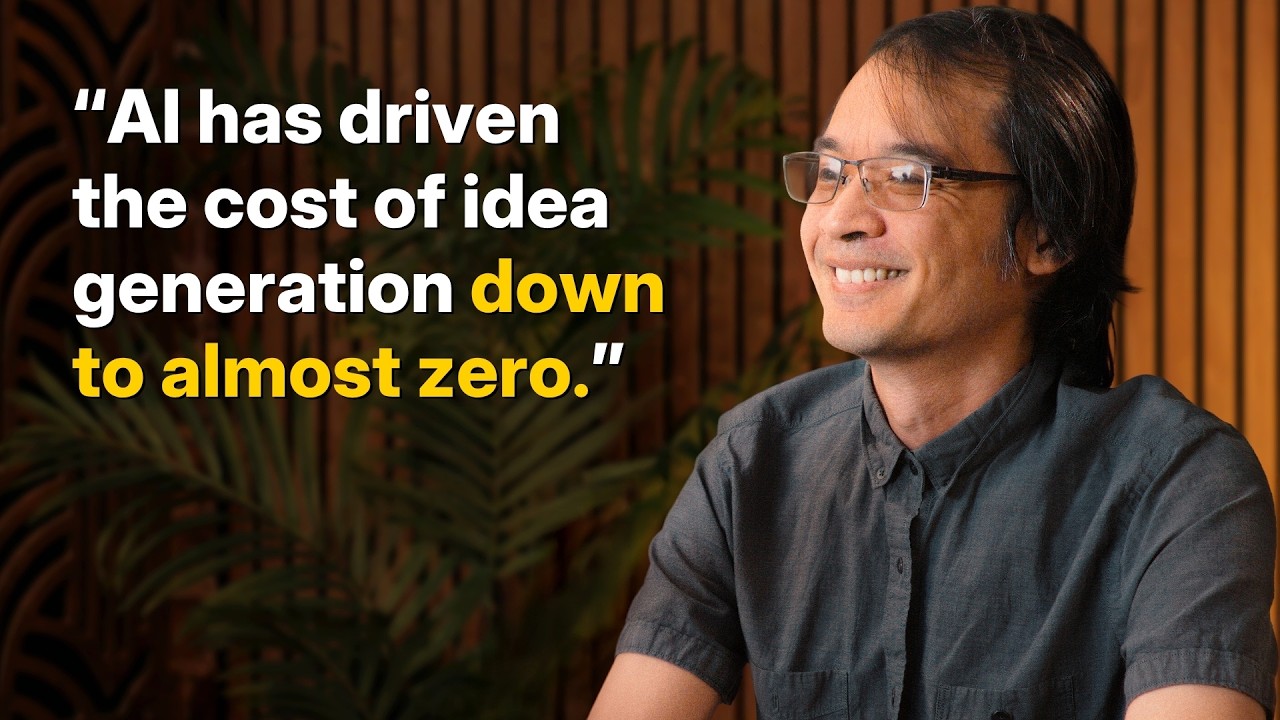
Terence Tao – How the world's top mathematician uses AI

Terence Tao · UCLA mathematician, Fields Medalist

当世最强的数学家谈他亲手用过 AI 之后的判断:想法生成的成本几乎归零, 但瓶颈搬到了 verification 这一侧;50 道 Erdős 问题被 AI 攻克之后随即陷入瓶颈; AI 像在黑暗中乱跳的机器人,能跨过低墙、爬不上悬崖;breadth × depth 才是 数学的下一步——但要先重设整个学术工作流。

Dario Amodei: Anthropic CEO on Claude, AGI & the Future of Humans & AI

Dario Amodei, Amanda Askell, Chris Olah · Anthropic CEO + Character lead + Interpretability co-founder

Lex Fridman 与 Anthropic 的三位核心人物同场对谈: CEO Dario Amodei 讲 scaling 假设、RSP 的 if-then 结构、"race to the top" 战略与 Machines of Loving Grace; character lead Amanda Askell 讲 Claude 的性格工程、sycophancy 与最优失败率; interpretability 共同创始人 Chris Olah 讲 features、circuits、superposition 和那个著名的 deception feature。三人从战略、产品、研究三个层面拼出 Anthropic 对 "AI inside" 的完整 stereo view。

The Best Vitality & Health Protocols | Dr. Rhonda Patrick

Dr. Rhonda Patrick · Biomedical scientist, FoundMyFitness founder

Dr. Rhonda Patrick joins Andrew Huberman for a comprehensive deep-dive into evidence-based health protocols covering exercise (VILPA, strength training), gut-inflammation cascades, omega-3 as her top supplement, cortisol management, intermittent fasting mechanics, creatine for brain health, and her full supplement stack with dosages and rationale.

How Hormones Shape Sexual Orientation & Behavior | Dr. Marc Breedlove

Dr. Marc Breedlove · Michigan State University neuroscience professor

Dr. Marc Breedlove explains how prenatal testosterone shapes sexual orientation, the fraternal birth order effect, gay rams, brain sexual dimorphisms, and why sexual orientation is not a choice — through the lens of decades of biological research.

Cultivating Awe & Emotional Connection in Daily Life | Dr. Dacher Keltner

Dr. Dacher Keltner · UC Berkeley Psychology Professor & Greater Good Science Center Co-Director

Emotion scientist Dr. Dacher Keltner explains the neuroscience of awe — how shifting perception from "small to vast" triggers measurable health benefits including reduced inflammation, less pain, and better brain health years later. The conversation spans the expanded taxonomy of 20 facial expressions, the role of teasing and embarrassment in group bonding, the loneliness epidemic, music as the fastest path to collective consciousness, and practical awe design for cities and daily life.

Science-Based Meditation Tools to Improve Your Brain & Health | Dr. Richard Davidson

Dr. Richie Davidson · Professor of Psychology & Psychiatry, University of Wisconsin-Madison

Dr. Richie Davidson, a pioneer in meditation neuroscience, explains how just 5 minutes of daily meditation for 30 days produces measurable reductions in depression, anxiety, and inflammation. He introduces the concept of "the lactate of the mind" — the initial anxiety of meditation as an adaptation signal — and presents his four-pillar framework for human flourishing: awareness, connection, insight, and purpose.

Quantum Mechanics Contradicts Itself (and He Proved It)

Renato Renner · Professor of Quantum Information, ETH Zurich

Professor Renato Renner of ETH Zurich explains his no-go theorem showing quantum theory contradicts itself when applied to observers who are themselves quantum systems. The conversation covers three incompatible assumptions (universality, consistency, single outcomes), a gravity-based escape route involving reference frame loops, the black hole information paradox, and why choosing an interpretation of quantum mechanics is ultimately an emotional decision.

Michael Nielsen – Why aliens will have a different tech stack than us

Michael Nielsen · Research fellow, writer, quantum computing pioneer

Michael Nielsen and Dwarkesh Patel explore how scientific progress actually happens — from the messy reality of falsification to hostile verification loops that mislead for decades. They discuss why the tech tree is far vaster than we realize, why alien civilizations would develop radically different technologies, and what this means for AI-accelerated science.

The "Inverse Problem" Of Dark Matter Is Insane

Dr. Jenny Wagner · Astrophysicist, Institute of Astronomy & Astrophysics / Helsinki Institute of Physics

Dr. Jenny Wagner explains why gravitational lensing data only constrains local properties of mass distributions, making every grand dark matter map a model-driven extrapolation. She argues the inverse problem approach — reasoning from data to necessary models — could reshape cosmology and the scientific method itself.

The Theorem That Proves Science Can't Know the Universe

JB Manchak · UC Irvine Professor of Logic & Philosophy of Science

Professor JB Manchak proves that no amount of empirical data — even from every point in the universe — can determine its global structure. He introduces Heraclitus spacetimes (maximally asymmetric universes where local structure determines global structure), and draws surprising parallels between cosmic underdetermination and Zen Buddhist non-self.

Vikings, Ragnar, Berserkers, Valhalla & the Warriors of the Viking Age | Lex Fridman Podcast #495

Lars Brownworth · Historian, author of The Sea Wolves

历史学家 Lars Brownworth 用 1.5 小时把 793–1066 年的 Viking 时代拆给你看: 从 Lindisfarne 那场让欧洲修士相信"世界末日来了"的袭击,到长船 70–120 mi/day 的恐怖速度, 再到 Ragnar、Valhalla、Berserkers、Leif Erikson 的 Vinland、东到 Constantinople 的 Varangian Guard。最后落到一个反差:这个 destroyer 民族只用了三代人就变成 builder, 造出了 Normandy、Kievan Rus 与现代欧洲的雏形。